

Updated 2026 • Dog Carrier Buying Guide
Shopping for a dog carrier sounds simple until you actually start looking. There are dog carrier tote bags, backpack carriers, airline-friendly pet carriers, dog slings, hard-sided carriers, travel crates... and countless variations within each category.
We’ve (Steph and Mike) traveled just about every possible way with our dachshund, Django: planes, trains, automobiles, NYC subways and buses, Amtrak, and plenty in between.
Django has flown with us throughout the U.S. and Europe, ridden trains up and down the East Coast, joined us on cross-country road trips and quick weekend getaways, and spent years navigating New York City with us when we lived there. In fact, those years carrying Django around NYC helped inspire us to design our own dog carrier tote in the first place.
All of our travel has taught us that the right dog carrier depends largely on how you plan to use it. A small dog joining you for errands and coffee runs may be happiest in an easy-access tote, while a dog who hikes, commutes, or spends long days sightseeing with you may be more comfortable in a supportive dog carrier backpack. Flying generally calls for a fully enclosed, airline-friendly pet carrier designed to fit beneath an airplane seat, while car travel or more contained transport may be better suited to a travel crate or hard-sided carrier.
Your dog’s size, body shape, and preferred riding position matter too. We’ve used what we’ve learned over the years to design our own pet carriers for small dogs and evaluate the features that actually make a carrier comfortable, secure, durable, and practical in real life.
Below, we break down the five most common types of dog carriers, including the pros and cons of each, which dogs and outings they work best for, and the features we believe matter most.
Which Type of Dog Carrier Do You Need?
Choose a dog carrier tote bag with a stable floor, secure harness tether, comfortable handles, durable materials, and useful storage.
Choose a dog carrier backpack with a supportive base, good airflow, secure closures, and a true backpack carrying system for you.
Choose a fully enclosed, well-ventilated, and airline-friendly pet carrier that fits your dog comfortably and meets your airline's under-seat requirements.
A dog sling can work for some puppies and small dogs and be a practical choice for brief outings when the fit is secure and the dog is closely supervised.
Consider a hard-sided pet carrier or travel crate. If vehicle crash protection is the priority, look specifically for an independently tested model designed for vehicle use and safety.
Many small-dog owners ultimately use two different carrier styles because the best carrier for everyday errands is rarely the best option for every type of travel.
What to look for in any dog carrier
Best carriers for dachshunds & sensitive backs
1. Dog carrier tote bags
2. Dog backpack carriers
3. Airline-friendly pet carriers
4. Dog sling carriers
5. Hard-sided carriers & travel crates
Compare all 5 dog carrier types
Do you need more than one carrier?
How to choose the right dog carrier size
Helpful dog carrier resources
Dog carrier FAQ
What Should You Look for in a Dog Carrier?
These are the features we consider essential in a great dog carrier: a stable and horizontal base, secure closures or tether, excellent ventilation, durable materials and hardware, comfortable carrying support, and practical storage.
- Correct size and fit: Your dog should fit comfortably without being squeezed, folded into an awkward position, or sliding excessively inside an oversized carrier. Check whether published dimensions are interior or exterior, and compare them with your dog's actual measurements.
- A stable floor: In pet totes, backpacks, and airplane carriers, we prefer a sturdy base that stays level under the dog's weight rather than bowing or sagging. Soft cushioning on top is great, but there should still be stable support underneath it.
- Comfortable positioning: Your dog should be able to settle naturally in the position intended for that particular carrier. A good carrier should support the body without forcing the dog into a position that does not work for their shape.
- Ventilation: Fully enclosed carriers need generous airflow, ideally through mesh panels on multiple sides. Even in an open carrier, monitor your dog's temperature and comfort, especially in warm weather or during longer outings.
- Secure closures: Zippers, buckles, openings, seams, and hardware should feel substantial enough for the dog riding inside. For fully enclosed carriers, locking zipper hardware is especially important for dogs who push or nose at openings.
- A properly used safety tether: Open or partially-open carriers should have a secure interior tether when appropriate. Attach it to a well-fitting harness rather than a collar, and adjust it so your dog remains secure without being pulled into an awkward position.
- Human comfort: Your dog's carrier also has to work for you. For longer carrying, consider strap padding, balance, weight distribution, sternum straps and hip belts (for pet backpack carriers), and how the carrier sits against your body.
- Durability and easy care: Dogs bring hair, muddy paws, drool, treats, and the occasional accident. Durable materials, wipeable interiors, secure hardware, and removable washable bedding make a noticeable difference in real life.
- Useful storage: Especially for everyday and adventure carriers, secure pockets for your phone, wallet, keys, waste bags, treats, water, and other essentials can eliminate the need to carry another bag.
If your dog has an orthopedic, spinal, respiratory, mobility, or other medical condition, ask your veterinarian whether a particular carrier style and riding position are appropriate before using it for extended outings.
Best Dog Carriers for Dachshunds and Dogs With Sensitive Backs
If you're a dachshund owner, you probably know the rule: “support the butt.” We learned why that matters the hard way when Django suddenly lost the use of his back legs from IVDD and needed emergency spinal surgery. Ever since, we have been extremely careful about how his long back is supported whenever he is lifted or carried.
For dachshunds, corgis, senior dogs, and other dogs with long bodies or sensitive backs, we prefer carriers that support the dog from underneath rather than letting the rear end dangle or forcing the body into a fixed upright position. In a tote, that means a firm, level base with enough usable floor length for the dog's body. In a backpack, we prefer a horizontal design that lets the dog ride on all fours and naturally sit, stand, or lie down.
That philosophy is built into every DJANGO pet carrier. Both the DjangoTote™ Dog Carrier Tote and DjangoPack™ Dog Carrier Backpack use firm, supportive horizontal bases. We designed them with Django's back in mind, but we believe stable, natural support is simply good carrier design for every dog.
If your dog has IVDD, current back pain, a recent spinal injury, or another orthopedic condition, ask your veterinarian or veterinary neurologist which carrier and riding position are appropriate. You can also read Django's IVDD story and spinal surgery experience and our guide to dog backpack carrier safety for dachshunds and dogs with sensitive backs.
Dog Carrier Tote Bags
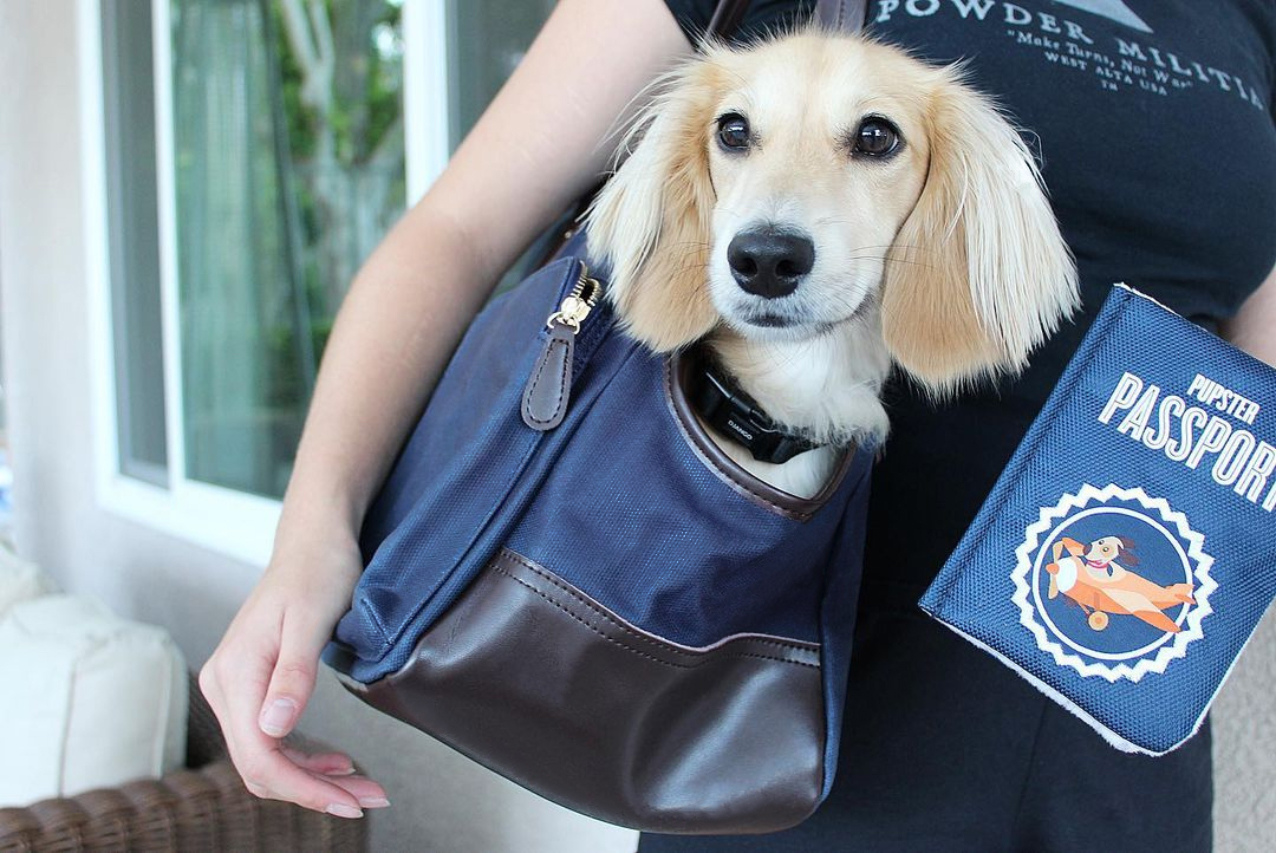
Dog carrier tote bags are one of our favorite options for small dogs who regularly join their humans for errands, shopping, cafés, appointments, vet visits, hotel stays, short commutes, or other everyday outings.

What Makes a Good Dog Carrier Tote Bag?
A great dog carrier tote should be well-made, supportive, secure, and comfortable for both dog and human.
Look for durable materials, strong zippers and hardware, a firm supportive base that will not sag under your dog’s weight, soft cushioning, an easy-to-clean interior, a secure harness tether, zippered storage, and comfortable carry handles.
Those are the same features we prioritized when designing the DjangoTote™ Dog Carrier Tote. After years of carrying Django around New York City, we wanted a tote that was sturdy and supportive for him, stylish enough to carry every day, and functional enough to replace our regular bag.
Fit matters too. Especially for long-backed dogs like dachshunds, usable floor length can be just as important as weight capacity.
If you are comparing options, our dog carrier tote buying guide goes deeper into sizing, support, materials, safety, and other features worth considering.
View the DjangoTote™Open-Front vs. Fully Enclosed Dog Carrier Totes
Many everyday dog carrier totes have an open or scoop-style front that lets the dog look out and stay close to you. We love this style for calm, carrier-trained dogs who enjoy watching the world go by.

But an open-front tote is not the right choice for every dog. Nervous, jumpy, highly excitable, or escape-prone dogs may do better in a fully enclosed carrier. In an open tote, your dog should remain supervised and securely attached to the carrier's interior tether with a well-fitting harness.
- Easy to pick up, put down, and carry for everyday outings
- Keeps your small dog close and easily accessible
- Can replace your everyday tote when designed with useful storage
- Less bulky than many backpacks or hard-sided carriers
- Great for city life, errands, shopping, appointments, and short trips
- A structured floor gives the dog a stable surface underfoot
- Often more polished and discreet than technical pet gear
- Weight is concentrated more heavily on one shoulder than with a backpack
- Less comfortable than a supportive backpack for long-distance carrying
- Open-front styles are not appropriate for every dog's temperament
- Construction quality varies considerably among products
- Most open-front everyday totes are not designed for under-seat airline travel
DjangoTote™ Waxed Canvas Dog Carrier Tote
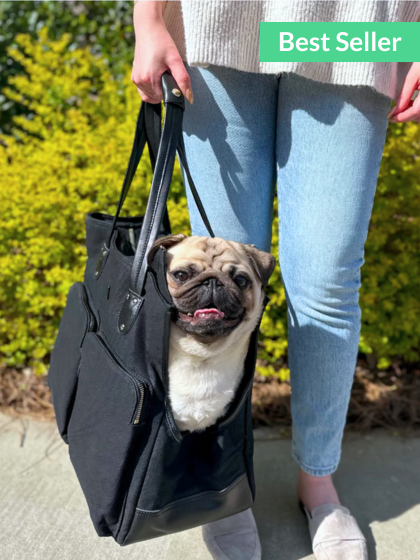
When we designed the DjangoTote™ Dog Carrier Tote Bag, we wanted it to function like a true pet carrier while looking more like a stylish weekender bag than a bulky piece of pet gear.
We started with a firm, supportive base so the floor remains stable under the dog's weight, then added a removable sherpa-lined footpad sleeve for cushioning and easy washing. The smooth interior lining is water-resistant and easy to wipe clean, and an adjustable bag-to-harness tether keeps the dog secured inside the open-front design.

We also wanted to be able to leave our own bag at home. The DjangoTote has multiple secure zippered pockets for a phone, wallet, keys, treats, waste bags, travel documents, and other essentials, along with genuine leather shoulder handles and a durable 20 oz. waxed cotton canvas exterior.
The DjangoTote comes in two sizes.
- Medium measures 14.5"L × 8"W × 12.5"H and is generally best for petite dogs up to approximately 10–12 lbs.
- Large measures 17.5"L × 8"W × 14.5"H and typically works for small dogs up to approximately 20–25 lbs.
Actual fit depends heavily on back length, height, body shape, and preferred riding position.
Shop the DjangoTote™ Read Our Dog Carrier Tote GuideDog Backpack Carriers
A dog carrier backpack makes sense when you will be carrying your dog for longer periods, walking farther distances, hiking, sightseeing, climbing stairs, navigating public transportation where pets are permitted, heading to the vet, or simply want both hands free.
Why Dog Backpack Carriers Can Be Easier to Carry
One of the biggest advantages of a true backpack carrier is weight distribution. A tote, sling, and many traditional soft-sided pet carriers place most of the load on one hand or one shoulder. A well-designed backpack spreads your dog's weight across both shoulders, and more supportive designs add a sternum strap and hip belt to stabilize the carrier and transfer some of the load away from your shoulders.

That can matter a lot once the dog inside weighs 12, 15, or 20 pounds. For anyone who finds one-shoulder carrying tiring—whether because of age, an injury, limited upper-body strength, or simply the weight of their dog—a true backpack-style carrying system can make longer outings much more manageable.
If you're still deciding whether a backpack carrier makes sense for your dog, see our guide to the benefits of dog backpack carriers for hiking, travel, city life, senior dogs, and everyday outings.
This is also why we distinguish between a pet carrier that happens to have backpack straps and one that is actually built to carry weight like a quality hiking pack. Padding, strap placement, sternum support, a hip belt, back-panel comfort, balance, and the way the carrier holds its shape all matter once you are carrying a heavier small dog for more than a few minutes.
Horizontal vs. Upright Dog Backpack Carriers
Some backpack carriers give the dog a structured surface underneath the body so they can ride in a horizontal orientation and shift among comfortable positions. Others hold the dog's body much more vertically, sometimes with the legs extending through openings.
As dachshund parents—and as dog owners who have lived through the heart-wrenching experience of Django suddenly losing the use of his back legs and needing emergency spinal surgery for IVDD—we care deeply about how a carrier positions and supports his body. Watching Django go from paralysis through surgery and recovery changed the way we think about nearly every piece of gear we use with him. You can read more about Django's IVDD, paralysis, and spinal surgery in our detailed IVDD guide.
That experience is a major reason we prefer a backpack design that supports the dog from underneath and gives them room to settle rather than suspending the body in a fixed upright position. Actual construction and fit still matter more than a simple "horizontal" or "vertical" label, but we want to see stable support beneath the dog and enough usable space for them to adjust their position comfortably.
For more detail on carrier positioning, ventilation, fit, and safety, see our guide to dog backpack carrier safety.
View the DjangoPack™- Keeps both hands free
- Distributes weight across both shoulders
- Sternum straps and hip belts can improve stability on longer carries
- Useful for trails, sightseeing, stairs, crowds, vet visits, and public transit
- Fully enclosed models provide greater containment
- Quality designs can offer excellent ventilation and useful storage
- A stable horizontal base can give the dog room to sit, stand, or settle on all fours
- Usually bulkier than a tote or sling
- Can be excessive for a five-minute errand
- Fit and dog positioning vary significantly among designs
- Poorly ventilated backpacks can become warm quickly
- Some backpack-style pet carriers have minimal human support despite having two shoulder straps
DjangoPack™ Dog Carrier Backpack
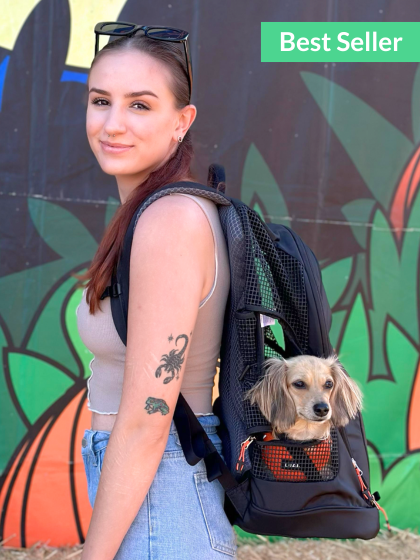
We designed the DjangoPack™ Dog Carrier Backpack with a fully supportive 14" × 10" horizontal base so small dogs can ride supported from underneath rather than being held in a fixed upright position.
For dog comfort and security, we added large wide-grid mesh ventilation panels, roll-back side windows for additional airflow and visibility when appropriate, premium YKK® locking zippers that dogs cannot easily nudge open, and an interior safety tether that attaches to a harness.

For the person carrying the dog, the DjangoPack is built more like hiking gear: padded shoulder straps, a breathable padded back panel, adjustable sternum strap, and removable hip belt help stabilize and distribute the load. A water bottle pocket, laptop sleeve, secure zippered storage, and rear loading straps mean the backpack can also carry the things you need for a hike, commute, or full day out.
The DjangoPack measures 14" wide at the base × 10" deep × 18.5" high and is designed for small dogs and cats up to approximately 20–25 lbs, depending primarily on back length, height, and overall body shape.
Want our full real-world breakdown? Read our 2026 DjangoPack review covering fit, comfort, materials, ventilation, hiking, and everyday use.
Shop the DjangoPack™ How to Choose a Dog Backpack CarrierNot sure whether your dog will fit? Our DjangoPack dog carrier backpack size guide explains how to use weight, back length, height, and body shape together when evaluating fit.
Airline-Friendly Pet Carriers and Under-Seat Dog Carriers
If you are flying with a small dog in the airplane cabin, you will generally need a fully enclosed, airline-friendly pet carrier that fits beneath the seat in front of you and complies with your airline's current pet-travel requirements.
You will see the phrase "airline-approved pet carrier" everywhere when shopping online. It is a useful search term, but it can create the impression that a carrier has some universal approval or certification. It does not.
Airlines establish their own in-cabin pet policies and carrier-size limits, and aircraft or seat configurations can affect available under-seat space. A bag that works beautifully for one airline or aircraft is therefore not guaranteed to work for every flight.
We have flown with Django throughout the U.S. and Europe, and one lesson we have learned is never to assume that the carrier or policy from your last trip will automatically apply to the next one. We always recommend checking your airline's current pet policy before booking and again before you travel.

What to Look for in an Airline-Friendly Pet Carrier
A good under-seat dog carrier has to balance two competing needs: compact exterior dimensions and comfortable, secure usable space inside. Every inch matters.
Look for generous mesh ventilation, secure zipper closures, a stable floor, enough structure that the carrier does not collapse excessively around your dog, comfortable carrying handles or straps, and durable materials that can handle a long travel day.
Soft-sided airline carriers can have an advantage because a small amount of flexibility may help them fit beneath an airplane seat. But soft-sided should not mean shapeless. The carrier still needs to maintain enough structure, usable interior space, and airflow for the dog inside.
- Designed around in-cabin and under-seat travel
- Fully enclosed for secure airport and airplane containment
- Quality designs offer generous mesh ventilation
- Soft-sided models are usually lighter and more adaptable than rigid carriers
- Useful for airports, taxis, hotels, and other portions of a travel day
- Carrier limits vary by airline and can vary by aircraft or seat
- Under-seat dimensions can be restrictive for longer or taller dogs
- Dogs need time to become comfortable riding fully enclosed
- A great airplane carrier may not be the most convenient everyday carrier
- Many are carried by hand or over one shoulder rather than with a full backpack support system
- Airline policies should be re-checked before every trip
We are currently working on an airline-friendly DJANGO carrier, and the design process has reinforced just how many tradeoffs are involved. The carrier needs to be compact enough for under-seat travel while still providing a stable floor, excellent ventilation, secure enclosure, usable space for the dog, durable construction, and a comfortable way for the human to carry it through an airport. Those are the details we would pay the closest attention to when comparing any airline carrier.
Carrier dimensions are only one part of planning an in-cabin trip. Compare current U.S. airline pet policies and in-cabin carrier restrictions, or see our international airline pet policy guide before booking.
Prepare Your Dog for In-Cabin Air TravelDog Sling Carriers
A dog sling carrier is a soft fabric pouch worn across the body or over one shoulder, with the dog sitting or resting close to the person's hip or chest.
The appeal is obvious: slings are lightweight, compact, easy to store, and quick to put on. For a very small, calm dog who only needs to be carried briefly, a well-fitting sling can be convenient.
The tradeoff is structure. Unlike a tote, backpack, or travel carrier with a stable base, many dog slings provide little or no structured floor beneath the dog's body. Fit therefore matters tremendously. Depending on the design, the dog may sink into the fabric, lean heavily to one side, or have relatively little room to reposition.

Are Dog Sling Carriers Good for Puppies?
They can be useful for some puppies, but we would not choose a sling simply because a puppy is tiny. Young puppies are often wiggly, curious, impulsive, and surprisingly good at trying to climb out of places you thought were secure.
A properly fitted sling can make sense for a calm, very small puppy during a brief supervised outing. Carriers can also be useful before a puppy is fully vaccinated because they allow your pup to experience new sights, sounds, and environments without walking through every public space. Always follow your veterinarian's guidance about vaccinations and safe socialization.
For a squirmy, jumpy, or particularly active puppy, we would lean toward a more structured tote or fully enclosed carrier with secure containment. Whatever style you choose, introduce it gradually rather than putting your puppy inside for the first time on a busy outing. Our guide to training a puppy or dog to ride comfortably in a pet carrier walks through the process step by step.
You can also see our broader guide to dog carriers and other essentials for puppies.
Dog slings are not inherently unsafe, but we would pay close attention to the individual design, how securely the dog sits inside it, whether their body appears comfortably positioned, and how long they will be carried. If your dog has a known back, orthopedic, or mobility condition, ask your veterinarian whether a sling is an appropriate option.
- Extremely lightweight
- Easy to fold and store
- Keeps the dog close to your body
- Quick to put on for short outings
- Can be convenient for very small puppies and petite dogs
- Often less expensive than structured carriers
- Many designs have no firm or structured base
- Body position depends heavily on the fit and construction of the sling
- Open designs may not contain a wiggly or escape-prone puppy well
- Weight is often concentrated on one shoulder
- Usually less comfortable for extended carrying
- Offers less storage and structure than most totes or backpacks
- Not generally designed for airline under-seat travel
If your main reason for considering a sling is convenient everyday carrying, compare it with a dog carrier tote bag. You may get a similarly easy shoulder-carry experience with more structure, storage, and usable space for your dog.
Hard-Sided Pet Carriers and Travel Crates
Hard-sided pet carriers and dog travel crates provide a rigid enclosure rather than the flexible walls of a soft-sided carrier. They can make sense for veterinary visits, certain road-trip setups, crate-trained dogs, and other situations where secure containment is the priority.
The rigid walls prevent the carrier from collapsing around the dog and create a defined interior space. They are also generally durable and easy to wipe clean.

Are Hard-Sided Dog Carriers Safer for Car Travel?
Not automatically. A hard shell may look more protective, but hard-sided does not mean crash-tested or crash-safe.
If vehicle protection is your priority, look specifically for a travel carrier or crate that has undergone independent crash testing and is designed to be secured in a vehicle according to the manufacturer's instructions.
The Center for Pet Safety maintains a list of CPS-certified pet travel carriers and crates for dog owners who want to research independently tested vehicle-specific options.
- Rigid structure does not collapse around the dog
- Provides a defined, contained space
- Can work well for dogs already comfortable in crates
- Durable and generally easy to wipe clean
- Independently crash-tested vehicle models are available
- Bulkier and heavier than most soft-sided carriers
- Less convenient for carrying through cities, shops, or airports
- Usually offers little storage for personal items
- Rigid designs can be difficult or impossible to fit beneath many airline seats
- Hard-sided construction alone does not indicate crash performance
Dog Carrier Comparison: Tote vs. Backpack vs. Sling vs. Airline Carrier vs. Crate
Use this quick comparison to narrow down which dog carrier style best fits your dog and how you travel together.
| Carrier Type | Best For | Why Choose It | Main Tradeoff |
|---|---|---|---|
| Dog Carrier Tote | Errands, cafés, vet visits, commuting & everyday outings | Easy access, comfortable everyday carry, useful storage | One-shoulder carrying can get tiring on longer outings |
| Dog Backpack Carrier | Hiking, sightseeing, longer walks & hands-free travel | Better weight distribution and support for longer carrying | Bulkier than a tote or sling |
| Airline-Friendly Pet Carrier | In-cabin flights, airports & air-travel days | Fully enclosed and designed around under-seat travel | Airline and aircraft size requirements vary |
| Dog Sling | Petite dogs, some puppies & brief carries | Lightweight, compact and easy to grab | Less structure and support than most totes or backpacks |
| Hard-Sided Carrier / Travel Crate | Secure containment, crate-trained dogs & some car travel | Rigid, durable enclosure; crash-tested models are available | Heavy, bulky and less convenient to carry |
Tote for everyday. Backpack for longer adventures and hands-free carrying. Airline carrier for flying. Sling for brief lightweight carry. Travel crate when secure containment or vehicle-specific protection is the priority.
Do You Need More Than One Dog Carrier?
Possibly, and that is not because every dog needs a closet full of gear.
Different pet carrier designs solve different problems. The carrier we use with Django for an everyday outing is not the one we want for a long sightseeing day or an airplane cabin.
An airline-friendly pet carrier, for example, needs to be fully enclosed and compact enough for under-seat travel. Those same features can make it less convenient than an open dog tote for a quick coffee run. A supportive hiking backpack can be wonderful for an afternoon on the trail but unnecessarily bulky when you are simply heading into a store or a vet appointment.
A particularly useful combination for small-dog parents who do both everyday outings and longer adventures. Use the tote for errands, cafés, appointments, and shorter trips; use the backpack for hiking, sightseeing, longer walks, and hands-free carrying.
A great combination for frequent travelers who also want an easier everyday bag at their destination. Fly with your dog securely enclosed beneath the seat, then use the tote for appropriate outings once you arrive.
Ideal for people who fly specifically to hike, explore, or spend long days sightseeing with their dog. Each carrier is optimized for a very different job.
An appropriately secured, independently tested vehicle carrier or crate can address car-specific safety needs, while a tote or backpack gives you a much easier way to carry your dog once you arrive.
For many small-dog owners, the best carrier setup ultimately comes down to the two situations they encounter most often.
Explore DJANGO Dog Carriers
DJANGO currently offers two carrier styles built for very different real-life uses: the DjangoTote™ Dog Carrier Tote for everyday outings and the DjangoPack™ Dog Carrier Backpack for hands-free adventures and longer carrying.
Although the designs are very different, we prioritize the same things in both: thoughtful fit, a stable surface beneath the dog, durable materials, secure details, practical storage, and comfort for the human carrying the bag.

How to Choose the Right Dog Carrier Size
Once you know which carrier style makes sense, do not choose a size based on weight alone.
Django's long dachshund body is one of the reasons we learned this lesson early. A dog can easily fall below a carrier's maximum weight and still be too long or tall to ride comfortably inside it.
Start by checking the manufacturer's actual carrier dimensions and measuring your dog. Depending on the carrier style, useful measurements include:
- Back length: Measure from the base of the neck to the base of the tail.
- Standing height: Measure from the floor to the top of the head or shoulders, depending on how the dog will ride inside the carrier.
- Body width and shape: A compact, broad-chested dog can fit very differently than a long, narrow dog at the same weight.
- Weight: Stay within the manufacturer's stated weight range, but use weight alongside your dog's actual dimensions.
- Preferred resting position: Consider whether your dog naturally sits upright, curls into a ball, stretches out, or prefers resting on all fours.

Also check whether a manufacturer's measurements describe the usable interior or the exterior of the carrier. Thick padding, structured walls, and curved sides can all reduce the amount of actual space available to your dog.
Long-bodied breeds such as dachshunds are a perfect example of why this matters. A dachshund may weigh considerably less than another dog but still require a longer carrier floor to fit comfortably.
If you are considering our backpack carrier specifically, see the DjangoPack sizing and fit guide. For tote-style carriers, our dog carrier tote guide includes more detail on measuring back length and choosing between tote sizes.
If you are introducing a dog or puppy to a new carrier for the first time, do not wait until travel day. Our step-by-step guide explains how to train your dog to feel comfortable riding in a pet carrier.
Final Thoughts: Which Dog Carrier Is Best?
The best dog carrier is the one that fits your dog, your outing, and the way you actually travel together.
For everyday errands, cafés, appointments, vet visits, and shorter outings, we love the convenience of a dog carrier tote bag. Look beyond just one feature and consider the entire carrier: fit, floor stability, security, handle comfort, durable materials, cleanability, and useful storage.
For hiking, longer walks, sightseeing, and hands-free adventures, a well-designed dog backpack carrier generally makes more sense. Pay close attention to how your dog is supported inside, ventilation, secure closures, and whether the backpack uses a true supportive carrying system for you rather than simply adding two shoulder straps to a pet bag.
For flying, choose a fully enclosed airline-friendly pet carrier based on both your dog's measurements and your airline's current requirements. For brief lightweight carrying, a sling may be enough for the right dog. And when rigid containment or vehicle-specific protection is the goal, research an appropriately sized travel carrier or crate designed and tested for that purpose.
After years of traveling everywhere with Django, we’ve learned that no single carrier does everything perfectly. Think about where your dog actually goes with you most, and choose the carrier that makes those adventures easier and more comfortable for both of you.
Explore DJANGO pet carriers for small dogs, from premium everyday dog carrier totes to supportive hands-free backpack carriers.

Helpful DJANGO Dog Carrier & Travel Resources
Dog Carrier Tote Guides
Dog Backpack Carrier Guides
- 5 Best Dog Backpack Carriers for Small Dogs & Hiking
- DjangoPack Dog Carrier Backpack Review: Fit, Comfort & Real-World Use
- Best Dog Carrier Backpack Reviews & Customer Feedback
- How to Choose a Dog Backpack Carrier: Size, Safety & Fit
- Are Dog Backpack Carriers Safe?
- Are Dog Backpack Carriers Good for Dogs?
- DJANGO Dog Backpack Carrier FAQs
- DjangoPack Dog Carrier Backpack Size & Fit Guide
Airline Pet Travel Guides
- U.S. Airline Pet Policy Comparison for In-Cabin Travel
- International Airline Pet Policies for In-Cabin Travel
- How to Prepare Your Dog to Fly in the Airplane Cabin
Carrier Training, Puppies & Back Health
- How to Train Your Dog to Love Riding in a Pet Travel Carrier
- Puppy Essentials: Dog Carriers & Other Useful Puppy Gear
- IVDD in Dachshunds: Our Experience with Django's Paralysis & Spinal Surgery
Dog Carrier FAQs
What type of dog carrier is best? +
The best type of dog carrier depends on your dog's size and body shape and how you plan to use the carrier. A dog carrier tote is ideal for errands, cafés, appointments, commuting, and shorter everyday outings. A dog backpack carrier is generally better for hiking, sightseeing, longer walks, vet visits, and hands-free carrying. For in-cabin flights, use a fully enclosed airline-friendly pet carrier that meets your airline's current requirements. Dog slings can work for brief carries with petite, calm dogs, while hard-sided carriers and travel crates are useful when rigid containment is the priority.
Is a dog carrier tote or backpack better? +
Neither is better for every situation. A dog carrier tote is usually more convenient for errands, cafés, appointments, shopping, and shorter outings because your dog stays close and easy to access. A backpack carrier is generally better for longer outings because it keeps both hands free and distributes the dog's weight across both shoulders. A supportive backpack with padded straps, a sternum strap, and a hip belt can also be easier for people who find carrying a dog on one shoulder tiring.
What should I look for in a dog carrier tote bag? +
Look beyond any single feature. A quality dog carrier tote should have enough usable space for your dog's body shape, a stable floor, a secure harness tether, comfortable shoulder handles, durable fabric and hardware, an easy-to-clean interior, and secure storage for personal and dog essentials. For an open-front tote, your dog's temperament and comfort riding in an open carrier also matter.
Should a dog carrier have a firm bottom? +
For dog carrier totes, backpacks, and soft-sided travel carriers, we always recommend a firm or stable base beneath the dog. A supportive bottom gives your dog a predictable surface for sitting, standing, or resting and helps prevent the carrier floor from sagging deeply under their weight. The base can still have soft cushioning or removable bedding on top for comfort.
Should a dog carrier safety tether attach to a collar or harness? +
We recommend attaching an interior carrier tether to a well-fitting harness rather than directly to a dog's collar. This avoids concentrating restraint force around the neck if the dog suddenly moves or tries to climb out. The tether should be adjusted so your dog remains securely inside the carrier without being pulled into an uncomfortable position.
Are dog backpack carriers easier to carry than shoulder pet carriers? +
Usually, yes! A backpack carrier spreads the dog's weight across both shoulders instead of concentrating it on one hand or shoulder. More supportive backpack carriers also include padded straps, a sternum strap, and a hip belt to improve stability and weight distribution. This becomes increasingly important as the dog gets heavier or the carrying distance gets longer.
Are dog sling carriers good for puppies? +
A sling can work for a very small, calm puppy during short supervised outings, and carrying a puppy can be useful before they are ready to walk through busy public spaces. However, puppies can also be wiggly, impulsive, and prone to trying to climb out. Choose a carrier that fits securely, supervise your puppy closely, and consider a structured or fully enclosed carrier for puppies who are especially active or escape-prone. Always follow your veterinarian's guidance about vaccinations and public spaces.
Are dog sling carriers safe? +
A properly fitted dog sling can work well for some small, calm dogs during brief outings. Because many slings do not have a structured floor, pay close attention to how securely your dog sits inside the sling and whether they appear comfortably positioned. For extended carrying or dogs with known orthopedic, back, or mobility conditions, ask your veterinarian whether a sling is appropriate.
What does “airline-approved pet carrier” mean? +
“Airline-approved pet carrier” is a common shopping phrase, but there is no single universal carrier size or certification accepted by every airline, aircraft, and seat configuration. Airlines establish their own in-cabin pet rules and carrier restrictions. We prefer the term airline-friendly pet carrier and recommend checking your airline's current pet policy and under-seat carrier limits before every trip.
Can I use a dog carrier tote on an airplane? +
Most open-front everyday dog carrier totes are not appropriate as in-cabin airline carriers because airlines generally require pets to remain securely enclosed in an appropriate under-seat carrier. For flying, choose a fully enclosed, well-ventilated airline-friendly pet carrier that complies with your airline's current requirements. Always verify the specific policy before your flight.
Can I use the same pet carrier for car travel and flying? +
Sometimes, but airline and vehicle-safety requirements are different. Airline carriers are primarily designed around secure under-seat travel, ventilation, and airline-specific dimensions. If crash protection in a vehicle is your priority, look specifically for a carrier or crate that has undergone independent vehicle testing and follow the manufacturer's installation instructions. A carrier being hard-sided or airline-friendly does not automatically mean it has been crash tested.
What is the best dog carrier for a dachshund or dog with a sensitive back? +
For dachshunds and dogs with sensitive backs, we prefer a carrier with enough usable floor length and a firm horizontal base that supports the dog from underneath. For everyday outings, a supportive dog carrier tote such as the DjangoTote™ Dog Carrier Tote can work well for dogs comfortable in an open-front tote. For hiking, sightseeing, or longer hands-free carrying, the DjangoPack™ Dog Carrier Backpack uses a supportive horizontal base and gives the dog room to ride on all fours. If your dog has IVDD, current back pain, recent spinal surgery, or another medical condition, ask your veterinarian or veterinary neurologist which carrier and riding position are appropriate.
How big should a dog carrier be? +
A dog carrier should provide enough usable space for your dog to ride comfortably in the position intended for that carrier without being squeezed or sliding excessively. Weight is only one sizing factor. Measure your dog's back length and standing height, consider body shape and preferred resting position, and compare those measurements with the carrier's actual dimensions and manufacturer sizing guidance.