
One of the best parts of running DJANGO is meeting people whose work helps dogs live fuller, healthier, and more adventure-filled lives with the humans who love them.
Dr. Krista Halling is one of those people. She is a board-certified veterinary surgeon, canine rehabilitation practitioner, outdoor adventurer, gear reviewer, and the founder of Dogpacking.com. With more than 25 years in veterinary surgery and canine rehabilitation, Dr. Krista has helped thousands of dogs with orthopedic, spinal, and mobility challenges.
What makes Dr. Krista’s perspective especially valuable is the way she brings science and real life together. She understands canine anatomy, biomechanics, injury, rehabilitation, and research. She also spends meaningful time outdoors with her own dog, River, and evaluates whether pet gear truly works on trails and during everyday outings.
This conversation is also personal for us. Our longhaired dachshund, Django, experienced stage 4 Intervertebral Disc Disease (IVDD) and underwent spinal surgery back in 2022, so questions about dog back health, mobility, safe movement, and supportive gear are never abstract in our family.
In this DJANGO Feature Interview, Dr. Krista explains how to recognize subtle signs of pain, what dog owners should know about IVDD and arthritis, how to keep senior and recovering dogs moving safely, what matters most in a dog backpack carrier and harness, and why an ordinary walk can be every bit as meaningful as an epic adventure.
Meet Dr. Krista Halling of Dogpacking.com
Dr. Krista, thank you so much for joining us! For DJANGO readers who are meeting you for the first time, can you share a little about who you are, your veterinary background, and what inspired you to create Dogpacking.com?
Thanks for having me! I’m Krista Halling, a veterinary surgeon and founder of Dogpacking.com. I created Dogpacking.com because research shows that spending intentional time outdoors together can benefit the physical and mental well-being of both dogs and people.
Over my 25 years in veterinary surgery and canine rehabilitation, I’ve had the opportunity to help thousands of dogs with mobility, orthopedic, and spinal issues. Through this I’ve seen firsthand just how powerful movement - especially outdoor activity - can be for a dog’s overall wellbeing and also for deepening their bond with their owner. Dogpacking.com grew out of a desire to help more people enjoy safe, meaningful adventures with their dogs.

You bring together such a rare combination of expertise as a board-certified veterinary surgeon, canine rehabilitation practitioner, outdoor adventurer, and real-world gear reviewer.
How has your background shaped the way you evaluate what dogs can safely do outdoors?
I think each part contributes something different.
As a veterinary surgeon, I understand how a dog’s body moves, adapts, what can go wrong, and the key requirements for a dog’s musculoskeletal and nervous systems to thrive.
My rehabilitation background has shown me how appropriate exercise can help dogs recover from injury and disease, regain function, build strength and balance, and stay active throughout their lives.
My veterinary training has also taught me how to critically evaluate scientific research. This allows me to separate evidence from opinion and translate the science into practical advice that dog owners and industry partners can actually use.
Finally, spending time outdoors with my own dog, River, has shown me that even the best gear has to work in the real world. The gear’s design needs to function not just in theory, but also on your local hiking trail, at a campground, and during everyday adventures to improve your dog’s experience or safety.
Ultimately, I evaluate everything—from activities to gear—through the lens of one question: “Does this help dogs enjoy richer, healthier, and safer lives alongside the people who love them?”
Before we dive into mobility, back health, and adventure gear, what is the mission behind Dogpacking.com, and what do you most hope dog owners take away from your work?
Dogpacking.com’s mission is to help people have better adventures with their dogs through evidence-based education, practical gear reviews, and inspiration.
The term dogpacking refers to doing intentional shared active time outdoors with your dog. By intentional I mean showing up ‘present’ for your dog - in ‘partner’ mode. Not immersed in your phone the whole time. The adventure doesn’t need to be grand. It could be a walk around the neighbourhood, a hike, a paddle, a bike ride, a camping trip, or simply exploring a new trail together. The distance doesn’t matter. What matters is spending meaningful time outdoors together.
One of the messages I hope dog owners take away is that movement is medicine—but it has to be appropriate movement for their breed, age, and fitness level. Regardless the activity, dogs benefit from spending intentional time outdoors with the people they love, and those shared experiences strengthen the bond between them.
Recognizing Pain and Protecting a Dog’s Mobility
You have spent decades helping dogs with orthopedic, spinal, and mobility challenges. What are the most common conditions you see in dogs?
Cranial cruciate ligament (CCL) rupture (similar to an ACL injury in people) is one of the most common orthopedic conditions in dogs. Depending on the breed, other naturally-occurring conditions include hip dysplasia, patellar luxation, and spinal disease (by naturally-occurring, I mean those excluding traumatic fractures).
Some of these conditions, such as elbow dysplasia, hip dysplasia, patellar luxation, and osteochondritis occur in puppyhood - when the dog’s bones and joints are still developing; whereas others such as intervertebral disk disease (IVDD) and CCL tears are degenerative in nature and thus usually occur in adulthood.
A common cause of mobility issues is osteoarthritis (OA), the progressive degradation of joint cartilage. OA results from an injury or condition causing joint inflammation and/or instability (e.g. CCL tear, hip dysplasia). Contributing factors include obesity and genetics.
It’s our understanding that certain orthopedic and mobility conditions are more common in particular breeds because of genetic predisposition and body structure.
Aside from IVDD, which we’ll discuss in more detail shortly, what breed-specific conditions should dog owners be aware of?
Yes, some breeds of dogs have a higher predisposition (as compared to all dogs) for developing a mobility-related condition. This generally relates to their genes and gene expression as well as their conformation (body shape), although environmental and nutritional factors can also influence whether the condition occurs and its severity.
Some other common examples include elbow dysplasia in Labradors and German shepherds; hip dysplasia in golden retrievers, German shepherds, and Bulldogs; osteochondrosis in Rottweilers; medial patellar luxation in miniature poodles; CCL tear in Labradors (and many other breeds). Since there are probably more dog breeds than there are countries, the list is a bit too long to be comprehensive here. So I’d suggest that anyone looking into getting a dog do their research on disease predispositions and behaviour traits for any breeds they are considering.
In terms of body type, I’d say that being overweight or obese would put ANY dog at a higher risk of developing mobility issues and/or worsening an existing condition. The flip side of that coin is that for an overweight dog, weight loss can significantly improve their mobility and reduce the severity of signs of any mobility conditions. Always best to keep your dog lean!

That is such an important reminder for every dog, regardless of breed.
In our own experience with Django, dogs can be remarkably good at hiding discomfort. They obviously cannot verbalize how they feel, and many dog owners worry they will miss a problem until it becomes obvious.
How can dog owners recognize the early signs of canine pain, soreness, weakness, or mobility trouble—especially before a dog develops an obvious limp?
While an obvious limp is easy to recognize, early signs of pain, weakness, or mobility problems can be much more subtle. The good news is that you don’t need to be an orthopedic specialist to notice when something isn’t right. Most owners know their dogs incredibly well, so one of the best things you can do is pay attention to anything that seems “off”—small changes that suggest moving has become uncomfortable or more difficult.
Those subtle changes might include reluctance to move around, taking longer to stand up after lying down, hesitating before jumping into the car or climbing stairs, being slower or falling behind on a familiar walk, standing with a hunched posture, scuffing their feet, stumbling, or seeming less willing to do activities they normally enjoy. Dogs can be quite stoic, so by the time a problem becomes obvious, they may already have been subtly compensating for weeks or even months.
One helpful distinction is that a dog in pain is often reluctant to attempt a movement because it expects it to hurt. A weak dog, on the other hand, will often try but simply doesn’t have the strength to succeed. Of course, many dogs have both pain and weakness, so the two may overlap.
If you’re ever unsure, trust your instincts. If your dog just doesn’t seem quite like themselves, it’s worth having them examined. Early diagnosis and treatment can often prevent a small problem from becoming a much bigger one.
From a prevention standpoint, what can dog owners do throughout their dog’s life to support strong joints, healthy muscles, and lasting mobility?
Obesity and a sedentary lifestyle are two of the biggest contributors to poor joint health and mobility. The best tips are to keep their dog lean, and do regular exercises which collectively incorporate these 5 fitness pillars: strength, endurance, balance/proprioception, flexibility, and mental enrichment.
IVDD, Dachshunds, and Back Health
This topic is especially close to home for us. Our long-haired dachshund, Django, experienced stage 4 Intervertebral Disk Disease (IVDD) and needed spinal surgery, so we know how frightening and overwhelming back problems can be. Aside from dachshunds, which other breeds are prone to IVDD or other spinal conditions?
First, I’m sorry to hear your boy needed spinal surgery and I was glad to read that he’s doing great today.
Yes dachshunds are definitely a big one for IVDD. IVDD refers to the degeneration of the cushioning discs between back bones. As the disks degenerate, they become less resilient and have a greater tendency to ‘eject’ disk material upwards into the dog’s spinal canal. The spinal canal is like a rigid tunnel containing the spinal cord, with very little spare room. When disk material enters that space, it can compress and injure the spinal cord and nerve roots, causing intense pain and reduced neurological function.
Other breeds at risk of IVDD include those that are chondrodystrophic meaning their bones are a bit shorter and stubbier than other breeds. Examples include bulldogs, Pekingese, corgis, and basset hounds.
Additional spinal issues causing reduce mobility +/- pain include Doberman Pinschers, who can develop a neck issue known as wobbler syndrome; and German Shepherds, who are at risk of lumbosacral disease and degenerative myelopathy.
Thank you, Dr. Krista. We are incredibly grateful Django recovered so well, and we know many readers will appreciate this clear explanation of what is actually happening inside the spine.
What are the early signs of IVDD, neck pain, or back pain that dog owners should never ignore?
I’d suggest just watching out for your dog seeming ‘off’. That’s usually the best first indicator that their check engine light is on.
For back or neck pain, early signs can include reluctance to move, standing with a hunched back, shaking, holding their neck stiffly, scuffing their feet, standing with a wide stance, or yelping when you pick them up. In some cases, there could be a quick progression of neurological signs including having difficulty walking or being paralyzed.
I’ll never forget Django’s first flare-up of back pain related to his IVDD. I was sitting on the floor when he slowly walked over, tucked his head between my legs, and stood completely still. I knew immediately that something was wrong and called our local animal hospital.
What should an owner do immediately if they suspect their dog may be experiencing IVDD or another spinal problem?
Since a spinal issue can range from intermittent pain to a complete loss of limb function, some signs are urgent while others can wait to be treated. The safest course of action is to restrict your dog’s movement immediately and contact a veterinary professional. Prevent any running or jumping, and call your primary care veterinarian or a local 24-hour veterinary emergency hospital right away. They are equipped to triage your pet over the phone, and guide you on steps for obtaining a clinical assessment and treatment.
After an IVDD episode or spinal surgery, what should owners understand about activity restriction, crate rest, gradually reintroducing movement, and transporting their dog safely?
Generally speaking, most recovery protocols start with activity restriction and avoiding jarring motions, including jumping or doing stairs, followed by a gradual, prescribed return to movement and exercises designed to rebuild strength and coordination. The specifics of an individual dog’s recovery protocol depend on the injury, type and severity of neuro deficits, and whether or not surgery was performed. You can expect a tailored protocol to be provided by the attending veterinarian or canine rehab expert.
Suspect IVDD or a spinal injury?
Restrict your dog’s movement and contact your veterinarian or a 24-hour emergency veterinary hospital immediately. Do not encourage walking, running, jumping, or stair use while you wait for professional guidance.
For more information, read our guide to IVDD in Dogs: Causes, Symptoms, and Treatment Options.
Arthritis, Senior Dogs, and Safe Movement
As dogs get older, many owners wonder how to keep them active while also recognizing when movement has become painful or difficult.
Aging or living with a mobility condition does not necessarily mean a dog should stop moving, but it does make paying attention to changes in comfort and function especially important.
Beyond IVDD, osteoarthritis and joint discomfort affect many dogs as they age. What are the most common signs owners should watch for?
Let’s start with the difference between ‘arthritis’ and ‘osteoarthritis’ (OA). The term ‘arthritis’ is often loosely used when referring to the degenerative process that affects cartilage in joints. To be specific, this condition is actually called ‘osteoarthritis’, differentiating it from other forms of arthritis such as bacterial arthritis or immune-mediated arthritis. So for the purpose of this conversation we’re technically referring to ‘osteoarthritis’.
Because OA refers to the gradual degradation of cartilage (most commonly caused by an unstable or abnormally formed joint), it causes pain, swelling, and inflammation of the affected joints. Signs of OA most commonly include stiffness, especially first upon rising; lameness, especially after intense exercise; and reduced joint range of motion - such as a dog sitting with their hind limb out to the side in order to keep their arthritic knee joint less flexed.
When a joint is painful, a dog will resist putting it through a full range of motion. This results in compensating by moving other body parts while keeping the affected joints pretty still. A common example of this is the lower back swaying seen in dogs with hip dysplasia. By swaying their back from side to side, the dog can advance their hind legs without causing much hip extension.

How significantly can excess weight affect a dog’s joint pain and overall mobility?
Yes. Excess body fat affects a dog’s mobility both mechanically and metabolically. Added weight increases the load placed on joints, and fat cells are biologically active and contribute to systemic inflammation. In time these effects lead to osteoarthritis.
Many people assume that senior dogs or dogs with arthritis should simply do less. How can owners help dogs with age-related changes, osteoarthritis, or past orthopedic injuries continue enjoying walks, travel, and outdoor time safely?
First I’d suggest making sure that any underlying cause of lameness or osteoarthritis (e.g. torn CCL) has been investigated and treated as indicated.
Secondly, work with your veterinarian to make sure that your dog’s pain has been adequately managed. If a dog is still in pain, you wont be able to restore function and improve mobility.
Beyond that, the best rules to remember for the musculoskeletal and neuro systems are: “lean is mean”, “movement is medicine”, and “use it or lose it”.
Keeping your dog lean, strong, and moving will go far to keep their muscles, joints, balance, and co-ordination happy at all ages. In dogs with mobility issues, achieving a leaner body condition can therefore meaningfully improve comfort and function. Weight management is therefore a key part of both preventing and treating mobility problems.
Strong core and limb muscles can improve mobility and reduce the risk of injury. Joints in particular benefit from regular motion to keep the cartilage healthy. Balance and proprioception exercises are great for the nervous system. Exercise and coordination exercises also support cognitive health. So don’t assume that a senior dog or dog with OA shouldn’t get much exercise. Often it’s just the opposite. In fact, strength exercises can prolong a dog’s life by keeping them more capable of getting up, doing stairs, and other qualify of life metrics - which often impact an owner’s decision of when to euthanize.
Check with your veterinarian as well about what specific activities are safe for your dog and also how to incorporate the 5 fitness pillars into them, especially strength and balance.
That is such an important reminder: movement should be adapted to the individual dog, not automatically eliminated.
As owners gradually rebuild or increase activity, how can they tell the difference between an exercise that is productively building strength and one that is pushing their dog too far?
You’re right that It’s a bit of a balance between building strength and pushing too far. An activity needs to be challenging in order to increase a dog fitness; yet if it’s too long, too far, or too hard, it risks causing injury.
Specifically for building strength, those sessions are short and repetitive - targeting a specific muscle group. Other types of fitness will involve adding speed and/or duration.
To avoid overdoing it, make sure the given activity is just a bit harder, OR a bit faster, OR a bit further, than the previous week. Don’t increase the speed, duration, and difficulty all at once. Keep an eye on your dog and stop when they show signs of fatigue (e.g. slowing down, having trouble completing a movement, panting with tongue tip curled). Also, if your dog is persistently stiff after the activity, or appears in pain, you’ve likely overdone it.
Dog Adventure Gear: What Actually Matters
Your gear reviews bring together two valuable perspectives: how a product interacts with a dog’s anatomy and natural movement, and how well it performs during real outdoor use. When you begin reviewing a piece of dog adventure gear, what do you evaluate first?
The first aspect I look at is how this gear interacts with the dog. Every piece of gear has benefits, but every piece of gear also has the potential to create problems—whether that’s chaffing, restricting natural movement, contributing to overheating, or simply being uncomfortable.
So I start by looking at comfort and safety. After that I consider how well it performs its intended purpose, how practical it is in the real world, and finally its overall build quality and durability.
What separates truly supportive, safe dog gear from gear that may be convenient or cute but does not fully respect a dog’s anatomy and natural movement?
Truly supportive gear respects a dog’s anatomy and natural movement while performing its intended job. During its intended use, it should fit securely without restricting normal motion, concentrating pressure, rubbing the skin or footpads, interfering with breathing, overly contributing to overheating, or present a choking hazard.
Fit also has to be assessed on the individual dog. A harness that works beautifully for one dog may rub another dog’s armpits or sit differently because of coat, conformation, or movement. That’s why owners should assess not only how gear looks while the dog is standing still, but also how it performs over time.
That individual fit piece is so important. A product can look perfect while a dog is standing still and still create rubbing, pressure, restriction, or discomfort once the dog starts moving.

With that in mind, what should dog owners look for in a good dog backpack carrier for hiking, everyday outings, and longer adventures?
I’d suggest the first consideration be the backpack’s size and its stated weight tolerance. In addition to being able to hold the weight of your dog, make sure your dog can fit comfortably in it, which means they should be able to freely turn around and reposition themselves.
Other factors to look for include being well-made (check the stitching and the quality of zippers); having ample ventilation; and maintaining its shape. A hip belt is useful to reduce the weight load on the shoulder straps as well as on the owner’s back.
Dogs (especially overweight dogs or brachycephalic breeds) dissipate heat much less efficiently than people, so ventilation becomes especially important, particularly during warm or humid weather. Overheating could also occur when the carrier may be enclosed, such as under an airline seat.
I also like backpacks with multiple ways to enter and exit. This is useful so your dog doesn’t need to turn around to exit, and in case of zipper failure you have another way to let them in/out.
Finally, human comfort should be considered. If a backpack fits your dog great but you find it very uncomfortable to wear, you won’t get much value from it. In my opinion, padded shoulder straps and a hip belt are a ‘must’ for the user’s comfort and musculoskeletal health. Mesh backing allowing airflow is also a huge plus on warm days.
In short, if I had to prioritize one backpack feature beyond fit, it would be ventilation.
For dachshunds, long-backed dogs, senior dogs, or dogs with sensitive backs and joints, what should owners understand about horizontal versus upright backpack carriers? From a veterinary and mobility standpoint, does body position matter?
While peer-reviewed research directly comparing horizontal and upright dog backpack carriers is lacking, from an anatomical and biomechanical perspective, body position does matter.
Think about how a dog is built—they’re quadrupeds, meaning their anatomy is designed to function primarily in a horizontal position. Placing a dog in a prolonged upright position creates three important considerations: a prolonged upright posture, a relatively fixed position, and reduced agency.
Maintaining an upright posture requires dogs to continuously engage their core muscles to stay stable, especially while their owner is moving. Short periods in an upright position, such as begging, are actually excellent core-strengthening exercises and are commonly used in canine fitness and rehabilitation. However, if that posture is required to be maintained for prolonged periods, or if those muscles become fatigued or are weak, it can become uncomfortable and may increase the risk of tissue strain.
A fixed upright position also keeps a dog’s hips, knees, and ankles in a flexed position for an extended period. That may become uncomfortable, particularly for dogs with osteoarthritis or other joint problems. It also prevents dogs from shifting their weight and changing positions naturally.
The third consideration is agency. Agency means having some control over your own body and environment. Allowing a dog to adjust its posture, sit, lie down, or shift its weight can improve physical comfort while also supporting confidence, well-being, and the overall enjoyment of the adventure.
For those reasons, I generally prefer a backpack that allows a dog to sit naturally, lie down, and change positions throughout an outing. It allows the dog to redistribute body weight, move its joints, rest its postural muscles, and retain some agency. An additional practical advantage is that if a dog becomes ill or injured on the trail, a horizontal carrier is generally likely to provide a more comfortable transport position than an upright one.
That is a helpful framework for thinking about how position, movement, and the ability to shift weight can affect a dog’s comfort in a carrier.
With those considerations in mind, when reviewing the DjangoPack Dog Carrier Backpack, what stood out to you from a veterinary, adventure, or gear-review perspective?
The dog-specific design. It’s clear the DjangoPack was very well thought-out from the dog’s perspective as an end-used. That’s hugely important for providing comfort and safety.
View the DjangoPack Dog Carrier Backpack
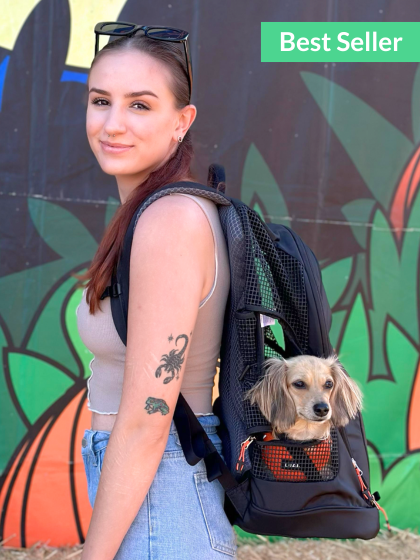
The DjangoPack Dog Carrier Backpack is designed to let small dogs sit naturally, lie down, and reposition themselves during an outing. It features a supportive horizontal base, breathable mesh ventilation, multiple openings, padded shoulder straps, a removable hip belt, and built-in storage for walks, travel, and outdoor adventures.

One outdoor risk dog owners often underestimate
What outdoor safety issue do dog owners often underestimate?
A dog’s high risk of overheating. Dogs are much less efficient at dissipating body heat than people because they rely on panting rather than sweating. On top of this, humidity, exercise, obesity, and brachycephalic anatomy all further increase a dog’s risk of life-threatening heat stroke.
So never judge your dog’s temperature comfort by your own. Plan outings for cooler times of day, carry ample water, allow frequent breaks in the shade, and stop before your dog is struggling.
Dog Harnesses Versus Collars
Let’s shift gears to dog harnesses, an area closely connected to our work at DJANGO.
From a veterinary and mobility perspective, what should owners look for to ensure a harness fits comfortably, allows natural movement, and does not cause rubbing or chafing?
In general, most well-fitting harnesses are pretty safe. Check that you fit it to the manufacturer’s guidelines and that there’s room around the neck and that the straps aren’t too tight (two fingers is a good rule of thumb; too loose and chafing would occur). Y-shaped harnesses don’t restrict shoulder movement and might be better for your dog if they’ll be doing a lot of running and jumping.
With any harness, always watch for signs of chafing (redness, loss of hair, open wounds) anywhere the harness contacts your dog - especially at the margins of the fabric and under straps, over shoulders, and under arms. Also note that the risk of chaffing and wounds increases dramatically if either the harness or your dog’s skin is wet.
That is a good reminder that harness fit should be evaluated while a dog is moving, not just while standing still—and that wet skin or fabric can increase the risk of chafing.
The harness-versus-collar debate can become surprisingly complicated. When is a dog harness the better choice than a collar?
A harness is a better choice whenever your dog is expected to pull against resistance (e.g. biking, ski-jogging, canicross), or if they have a history of a neck injury, or if you might need to hoist your dog up. Also if there’s a risk of a fall (such as hiking along a ridgeline or scrambling), a secure, properly fitting harness would provide a safer means of restraint than a collar.
Are there particular breeds, body types, or health conditions for which using a harness is especially important?
Yes. Ideal candidates would be ones with a history of neck injury, brachycephalic breeds, and dogs needing mobility assistance (e.g. those with weakness, stiffness, or lameness).
Find a comfortable, secure harness for your dog
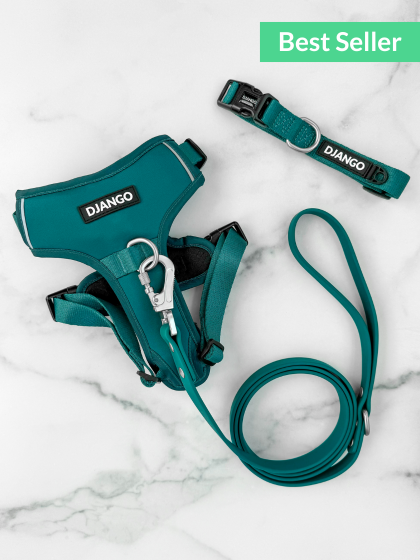
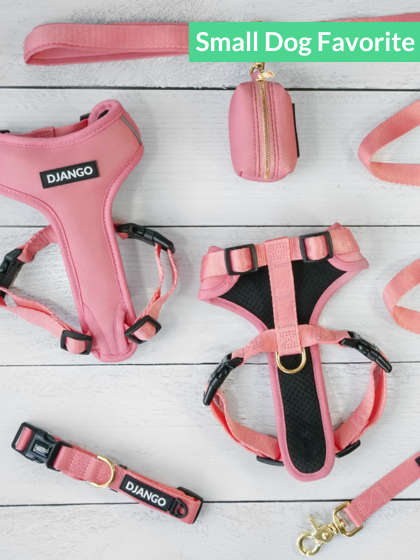
DJANGO dog harnesses are designed for secure, adjustable fits across a wide range of dog shapes and sizes. Explore our lightweight Adventure Dog Harness and front-and-back-clip Tahoe No Pull Dog Harness.

The Human-Animal Bond and Meaningful Outdoor Life
At DJANGO, we have always believed that life is better when dogs can safely and comfortably share in our everyday experiences. To close, I’d love to step back from specific health conditions and gear and talk about the deeper reason these adventures matter.
Outdoor time is clearly about much more than exercise. Why do shared experiences outside feel so meaningful for dogs and the people who love them?
Outdoor experiences with dogs feel so meaningful because they allow us to be fully present together. When we’re outside with our furry best friend, we’re usually less distracted by screens, schedules, and the demands of everyday life. Instead, we’re sharing an experience—exploring a trail, watching wildlife, paddling across a lake, or simply walking through the neighbourhood together.
From a dog’s perspective, these experiences also offer agency—the freedom to stop and sniff, choose the pace, or investigate something interesting along the way. Having opportunities to make choices is important for a dog’s welfare, confidence, and overall enjoyment of the experience. Those shared moments also build trust, improve communication, and deepen the human-animal bond.
There’s also an increasing body of scientific evidence showing that spending time in nature and being physically active benefit the physical and mental well-being of both people and dogs. After thousands of years of evolving alongside one another, our lives are deeply interconnected, and shared outdoor experiences are one of the many ways we strengthen that relationship.
It’s one of the reasons dogpacking doesn’t have to involve epic adventures. Some of the most meaningful moments happen on an ordinary walk close to home.

What does a genuinely successful adventure with a dog look like to you?
To me, a successful adventure isn’t measured by distance or difficulty level. It’s when both you and your dog come home a little happier and a little closer than when you left. If you’ve been present together, shared an experience, and your dog is safe, comfortable, and eager to do it again, that’s a successful adventure.
Before someone heads out on a hike, camping trip, bike ride, paddle, or big travel day, what is the one thing you wish more dog owners would do?
I’d say these two things are equally important.
First, make the adventure about your dog, not the destination. Before heading out, consider your dog’s current fitness, the weather, the terrain, and choose an activity, pace, and duration that are appropriate for them. The goal is for your dog to finish the adventure happy, comfortable, and eager to do it again.
Second, don’t wait for the perfect setup—just start. People often delay dogpacking adventures because they think they need all the perfect gear or an epic destination. You don’t. Grab a leash, a bowl, some water, and head to a local trail or park close to home. You’ll quickly learn what works for you and your dog, and each outing will build both your confidence and theirs.
An adventure does not have to be epic
One of the most encouraging themes in Dr. Krista’s work is that meaningful outdoor time can begin close to home. A local trail, a new walking route, or an unhurried neighborhood walk can create the same opportunity to be present, let your dog explore, and strengthen your relationship.
Before We Go: Meet River
We cannot finish without properly introducing River! Can you tell us a little about your fluffy sidekick and the adventures you enjoy together?
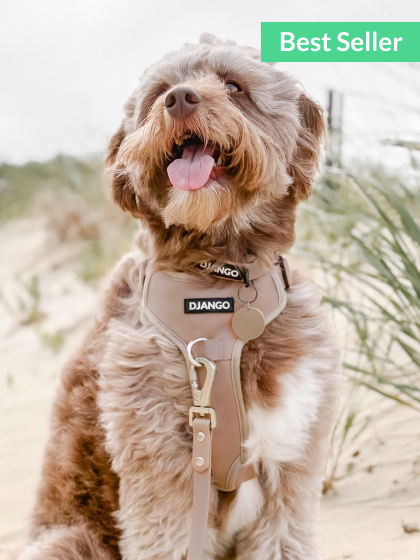
Absolutely! My sidekick is River, a mini goldendoodle with enormous ears (I call them her airplane wings.). Her nickname is ‘the fluffy monkey’.
River’s always happy and up for anything. She loves meeting people, playing fetch, paddleboarding, and kayaking. We also have a folding bike, and love doing cycling adventures far and wide, since we can travel with it by plane or in our minivan camper.

Where can DJANGO readers find you, follow River’s adventures, explore Dogpacking.com, and learn more from your work?
We’d love to hear from your readers. They can find River and me on our Dogpacking.com website for general dogpacking info, to ask questions, or for one-on-one consulting; as well as on social media (Insta: dogpacking_com; YouTube: @dogpacking_TV).
Thanks for interviewing me!
Where to Find Dr. Krista Halling and Dogpacking.com
- Website: Dogpacking.com
- Instagram: @dogpacking_com
- YouTube: @dogpacking_TV
Thank you, Dr. Krista!
A huge thank you to Dr. Krista Halling for sharing her time, veterinary expertise, and thoughtful approach to outdoor life with dogs.