
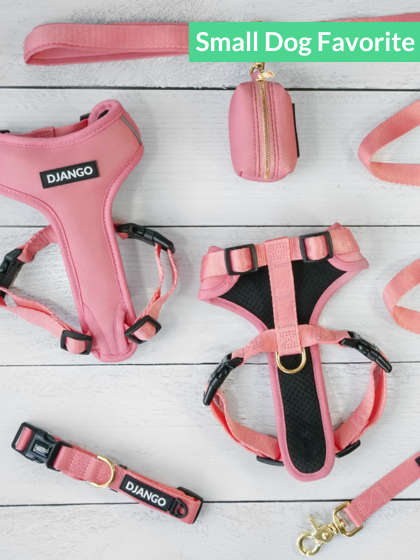


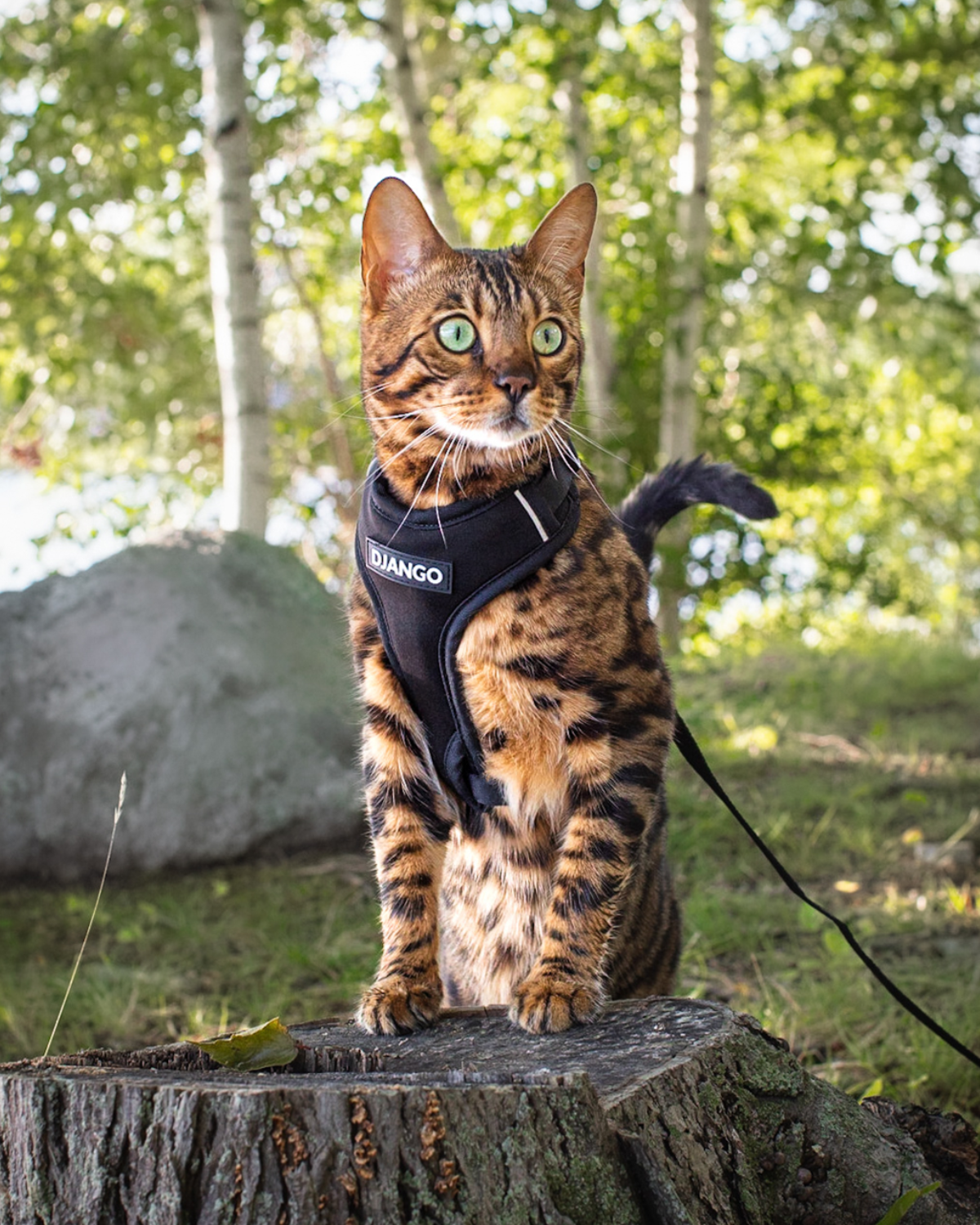
Shop DJANGO cat harnesses designed for leash training, outdoor walks, hiking, camping, travel, and supervised exploring. The Adventure Cat Harness combines padded comfort, four-point adjustability, and an escape-proof fit when properly sized and adjusted—giving cats freedom to move naturally and owners greater peace of mind.
Cats are flexible, agile, and remarkably good at slipping through small spaces, so harness fit matters. A cat walking harness should fit closely around the body without pressing into the throat, rubbing behind the front legs, or restricting natural movement. Multiple adjustment points are especially helpful for creating a secure fit around different neck, chest, and body proportions.
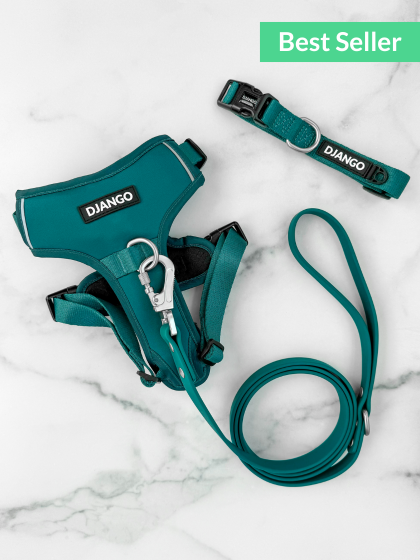
The DJANGO Adventure Cat Harness features a weather-resistant neoprene exterior, soft breathable sport-mesh lining, flexible anti-chafe webbing, reflective piping, and solid brass hardware. Choose from sizes Small through Large for chest girths from 13–26 inches and nine adventure-ready colors.
Free U.S. shipping on orders $75+ · Free U.S. exchanges within 30 days
Why the Right Cat Harness Fit Matters
A comfortable cat harness needs to balance two things: security and freedom of movement. It should fit closely enough to minimize gaps a cat could potentially back out of while sitting comfortably around the neck and chest. The harness should stay secure without interfering with the shoulders or front legs, allowing your cat to walk, climb, crouch, and explore naturally.
The Adventure Cat Harness was designed with four independently adjustable straps and a lightweight, low-bulk shape so you can fine-tune the fit around your individual cat. Soft padding and breathable materials add comfort without surrounding your cat in excessive fabric.

Four Adjustment Points
Two neck adjustments and two chest adjustments help create a close, customized fit around your cat’s unique body shape.
Deep, Narrow Chest Panel
The padded front panel sits between the front legs and helps reduce rubbing behind the armpits while allowing natural movement.
Lightweight Padded Comfort
Weather-resistant neoprene, breathable sport mesh, and flexible webbing provide soft structure without a bulky vest-like fit.
Secure Back Leash Attachment
A solid cast brass D-ring provides a durable leash attachment on the back, while reflective piping adds visibility in lower light.
Cat Harness Sizing Guide
Start by measuring your cat’s chest girth around the widest part of the rib cage, usually just behind the front legs. Use this measurement to choose the correct Adventure Cat Harness size rather than relying on breed or weight alone.
Cats with similar weights can have very different body shapes, coat thicknesses, and proportions. Once the harness arrives, adjust both the neck and chest straps to create a close, comfortable fit without noticeable gaps.
Please note: XS is not currently available. Small is our smallest size and is generally best suited for adult cats approximately 8 lbs and up. Breed and weight are helpful starting points, but always use your cat’s actual chest girth to determine the correct harness size.
Need Help Choosing a Cat Harness Size?
Email hello@djangobrand.com with your cat’s chest girth and any sizing questions. Our U.S.-based team is always happy to help you choose the best size, and free U.S. exchanges are available within 30 days if another size is needed.

How Should a Cat Harness Fit?
A cat harness should fit snugly and securely without pinching, rubbing, pressing into the throat, or restricting movement. After adjusting the harness, let your cat move around indoors and check the fit again before attaching a leash or heading outside.
Below the Neckline
The front of the harness should sit below your cat’s natural neckline and should not press into the throat when the leash is attached.
Centered Between the Legs
The padded chest panel should remain centered between the front legs without shifting into or rubbing behind either armpit.
Snug, Not Restrictive
You should be able to fit about two fingers beneath the straps while avoiding loose gaps around the neck and chest.
Stable During Movement
The harness should stay centered as your cat walks, turns, crouches, and changes direction without excessive gaping, twisting, or shifting.
Designed for a Secure, Escape-Proof Fit
No cat harness can be guaranteed completely escape-proof for every cat. Cats are exceptionally flexible and may back out of a harness that is too loose, incorrectly adjusted, or poorly matched to their body shape. Four adjustment points help minimize gaps around the neck and chest, but correct sizing and adjustment are essential. Check the fit before every outing and always supervise your cat while the harness is in use.

How to Leash Train a Cat
Many cats can learn to comfortably wear a harness and explore on a leash, but the process should be gradual and positive. Some cats adapt quickly, while others need more time—and some may simply prefer staying indoors. Let your cat’s comfort and body language determine the pace.
Start With the Harness Indoors
Let your cat sniff and investigate the harness before putting it on. Pair the harness with treats, play, or another positive experience.
Keep Early Sessions Short
Begin with brief periods of wearing the harness indoors and gradually increase the time as your cat becomes comfortable moving naturally in it.
Add the Leash Indoors
Once your cat is relaxed in the harness, attach a lightweight leash indoors. Keep the leash loose and allow your cat to set the pace rather than pulling or dragging them.
Move Outside Gradually
Start in a quiet, controlled outdoor area with minimal noise and distractions. Keep the first outings short and remain close to your cat.
Let Your Cat Lead
Cat walks often look different from dog walks. Allow time for sniffing, watching, crouching, and exploring instead of expecting your cat to follow a set walking route.
Watch for Signs of Stress
If your cat freezes, hides, struggles against the harness, becomes highly alert, or repeatedly tries to retreat, return to a calmer environment and try again another day.
Outdoor Adventures Should Always Be Supervised
Check the harness fit before every outing, keep your cat attached to a securely held leash, and never leave a cat tethered or unattended outdoors in a harness. Build up to busier walks, hikes, camping trips, and travel only after your cat is comfortable wearing the harness and walking on leash.
Adventure Cat Harness Details
Harness Style
Lightweight padded cat harness with a secure back leash attachment
Sizes
Small–Large for chest girths from 13–26 inches
Adjustability
Four adjustment points around the neck and chest
Materials
Weather-resistant neoprene, breathable polyester sport mesh, flexible webbing, and solid cast brass hardware
Security
Escape-proof design with adjustable neck and chest straps and two secure side-release buckles
On & Off
Over-the-head design with two side-release buckles; no step-in or paw lifting required
Best Uses
Leash training, supervised walks, backyard exploring, hiking, camping, travel, and outdoor adventures
Care
Hand wash with mild detergent and air dry thoroughly; do not machine wash or tumble dry
Choose Your Adventure Cat Harness Color
The Adventure Cat Harness is available in nine rich colors, from classic Black to bright Dandelion Yellow and Sunset Orange. Every color features reflective piping and solid brass hardware for the same adventure-ready design.
Explore More Together
Find a secure, comfortable cat harness for leash training, neighborhood walks, backyard exploring, hiking, camping, travel, and wherever your adventures take you.
Four-point adjustable · Padded and breathable · Reflective details · Nine colors
Cat Harness FAQs
What is the best harness for a cat?
The best cat harness should fit securely around the body without pressing into the throat, rubbing behind the front legs, or restricting natural movement. Look for multiple adjustment points, comfortable padding, lightweight materials, secure buckles, and a sturdy leash attachment. The DJANGO Adventure Cat Harness combines four-point adjustability, padded neoprene, breathable sport mesh, flexible webbing, and a solid brass back D-ring for comfortable, supervised outdoor exploring.
What is the best escape-proof cat harness?
No cat harness can be guaranteed completely escape-proof for every cat. Cats are flexible and can sometimes back out of a harness that is too loose or incorrectly adjusted. Look for an escape-proof cat harness with multiple adjustment points that minimize gaps around the neck and chest. The DJANGO Adventure Cat Harness includes four independently adjustable straps to help create a close, secure fit when properly sized and adjusted.
Can cats be walked on a leash?
Yes. Many cats can learn to walk and explore on a leash with gradual training, patience, and positive reinforcement. Start with the harness indoors, add the leash once your cat is comfortable, and move to a quiet outdoor area before attempting longer or more stimulating adventures. Not every cat enjoys leash walking, so always follow your individual cat’s comfort level and body language.
How do I leash train my cat?
Introduce the harness indoors and allow your cat to investigate it before wearing it. Begin with short harness sessions paired with treats, play, or praise. Once your cat moves comfortably in the harness, attach a lightweight leash indoors and let your cat set the pace. Move outdoors gradually, beginning in a quiet, controlled area, and never pull or drag your cat if they become hesitant or nervous.
What size cat harness does my cat need?
Measure your cat’s chest girth around the widest part of the rib cage, usually just behind the front legs. The DJANGO Adventure Cat Harness comes in three sizes: Small fits a 13–16.5 inch chest, Medium fits a 17–20.5 inch chest, and Large fits a 21–26 inch chest. Use your cat’s actual chest measurement rather than weight or breed alone to choose the final size.
How should a cat harness fit?
A cat harness should fit snugly and securely without pinching, rubbing, or restricting movement. The front should sit below your cat’s natural neckline, the chest panel should remain centered between the front legs, and the straps should not rub behind the armpits. You should be able to fit about two fingers beneath the straps while avoiding loose gaps that could make it easier for your cat to back out.
Is a harness better than a collar for walking a cat?
For leash walking, a properly fitted harness is generally the better choice because it distributes leash pressure across the chest and body instead of concentrating it around the neck and throat. Attach your cat’s leash to the harness rather than relying on a collar for outdoor walking.
Is a step-in or over-the-head harness better for cats?
The best style depends on your cat’s comfort and the security of the final fit. Some cats dislike having their paws handled, which can make a step-in harness difficult to put on. The DJANGO Adventure Cat Harness slips over the head and closes with two side-release buckles around the chest, so your cat does not need to step into the harness or lift either front paw.
Can an indoor cat wear a harness outside?
Yes. A harness can provide a controlled way for some indoor cats to experience supervised outdoor time. Introduce the harness indoors first and move outside only after your cat is comfortable wearing it and walking on a leash. Begin in a quiet area, keep early sessions short, and never leave your cat outdoors unattended in a harness.
Can cats hike or camp in a harness?
Yes, some leash-trained cats enjoy hiking, camping, travel, and other outdoor adventures. Build up gradually from quiet walks and shorter outings before attempting more challenging environments. Always check the harness fit before heading out, keep your cat supervised and securely leashed, and choose activities appropriate for your cat’s temperament, experience, and comfort level.
How do I clean the Adventure Cat Harness?
Hand wash the Adventure Cat Harness with mild detergent and allow it to air dry thoroughly before the next use. Do not machine wash or tumble dry. Inspect the straps, buckles, stitching, D-ring, and other hardware regularly and discontinue use if the harness becomes damaged or excessively worn.