


Updated 2026 • Pet Carrier Sizing Guide
We take our dachshund Django everywhere we go. Over the years, he has traveled throughout the U.S. and Europe, explored cities with us, joined road trips and weekend getaways, and logged more flights, train rides, and hotel stays than we can count.
And everywhere we go, Django rides alongside us in a comfortable and well-sized pet carrier for his long doxie frame.
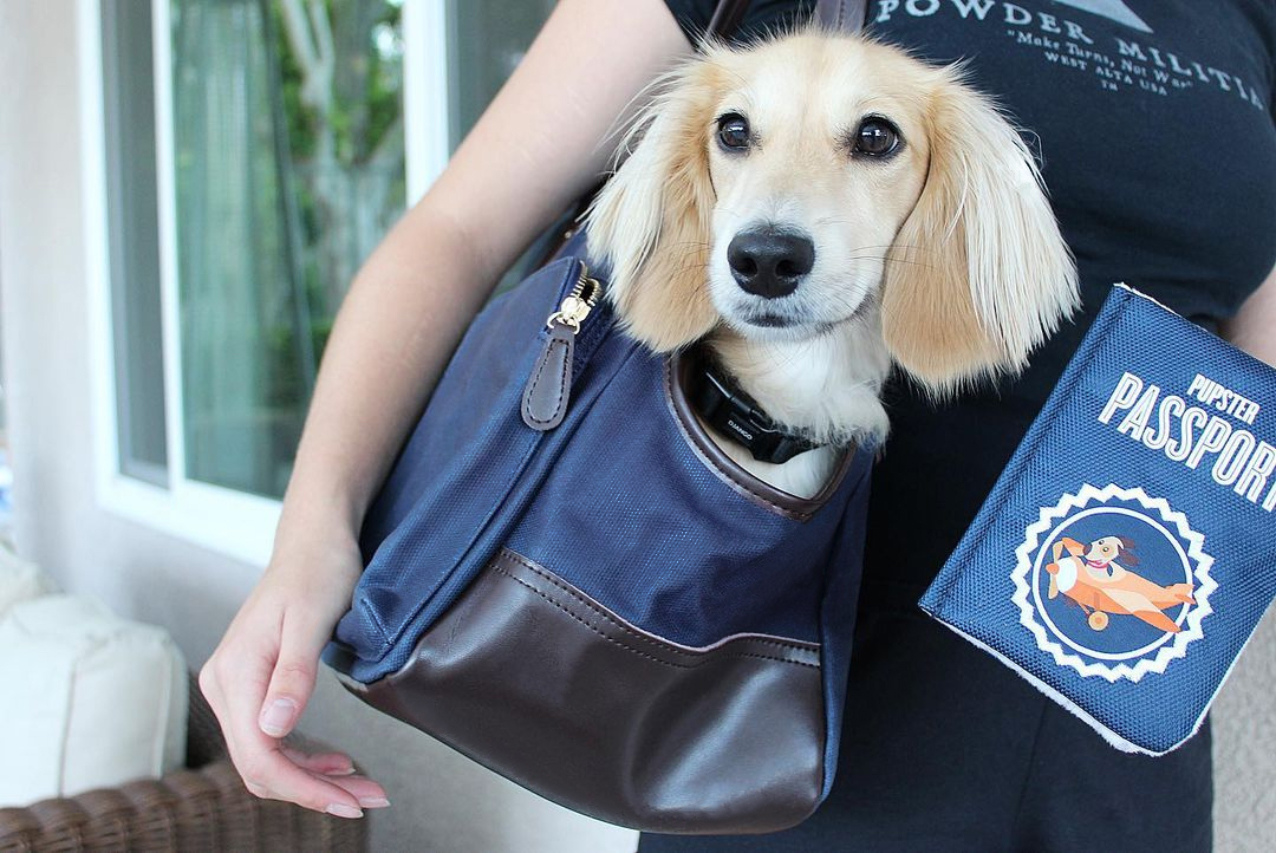
If we're exploring a new city on foot, Django gets a ride in his supportive tote carrier whenever his legs tire. If we're on a trail and the terrain is too steep, Django hops in his sturdy hiking-friendly dog carrier backpack. When we fly, Django remains secure and enclosed in his airline-friendly pet carrier.
All of our travel with Django has made one thing very clear: the right pet carrier will make bringing your dog along so much easier. But how do you find the right pet carrier for your pup? And how do you know if it will fit your dog comfortably?
In this DJANGO article, we cover how to measure your dog correctly for a pet carrier. We cover an assortment of pet carriers, and zoom in on pet weight, back length, standing and shoulder height, body width, and more.
Our goal is to help you find the best possible pet carrier for your pup's unique frame so your travels and adventures together are seamless, comfortable, and secure.
What Measurements Do You Need for a Dog Carrier?
Measure from the neck (where a collar sits naturally) to the base of the tail. Back length is a key measurement for airplane pet carriers, dog carrier totes, and backpack carriers.
Measure from the floor to the top of your dog's head while they are standing naturally. If your dog has upright ears, measure to the tips of the ears too. Standing height is especially important for fully enclosed carriers.
Measure straight across the widest part of the shoulders or rib cage. This helps you judge how much usable interior width your dog actually needs.
Check the carrier manufacturer's weight limit, but remember that it is not a guarantee of fit. Also consider how much weight you will personally be carrying once your dog is inside.
Does your dog sit upright, curl into a ball, stretch out, or prefer standing on all fours? How they naturally settle matters too.
How to measure your dog
1. Back length
2. Standing height
3. Body width
4. Weight
How to read carrier dimensions
Measure for a dog carrier tote
Measure for a backpack carrier
Measure for an airline pet carrier
What if your dog is between sizes?
How to Measure Your Dog
Before you start, grab a soft measuring tape, if one is available. Don't have this on hand? A string and ruler will also do the trick.
When you measure your dog, he or she should be standing on all fours on a level surface, with the head in a relaxed, natural position. The goal is to get the dimensions that best reflect how your pup's body will be naturally riding in a carrier.
Dogs wiggle. Puppies decide the measuring tape is a toy. If two measurements are slightly different, use the larger number when evaluating carrier fit.

How to Measure Your Dog's Back Length
Measure from your dog's neck to the base of the tail.
Start where your dog's neck meets the shoulders and run the measuring tape along the top of the back. Finish where the tail joins the body, and don't extend the measuring tape any further.
Fun fact: A compact 12-pound pug and a long 12-pound dachshund will weigh exactly the same while needing very different amounts of usable floor space.
How to Measure Your Dog's Overall Standing Height
With your dog standing naturally on the ground, measure from the floor to the top of the head. If your dog has upright ears, take a second measurement to the tips of the ears and note the larger number.
Standing height is particularly important when the dog will ride inside a fully enclosed carrier. A dog can fit comfortably on the floor of a bag and still be too tall once the top is zipped closed.
Some carrier companies ask for shoulder height, also called height at the withers. This measurement is taken from the floor to the top of the shoulder blades. Shoulder height does not replace overall standing height when your dog's head and ears must fit inside a fully enclosed carrier.
Fun fact: For an open-ended dog carrier tote, overall height is less restrictive because the design is intended to let your dog's head extend through the opening. Height and proportions still matter, though: the sides and scoop should sit comfortably around your dog's body, chest, and neck when they are in their natural riding position.
How to Measure Your Dog's Body Width
With your dog standing naturally, measure straight across the widest part of the shoulders or rib cage. Do not wrap the tape around the body—that is chest girth, which is a different measurement. If a flexible tape is difficult to use, place two straight objects gently alongside your dog and measure the distance between them.
This measurement is easy to overlook, but it can be very useful when comparing your dog with the interior width of a carrier.
A French Bulldog, for example, can have a much broader, more compact body than a dachshund of similar weight. The number on the scale may be almost identical, but the space each dog needs inside the carrier can be very different.
Weigh Your Dog
This one is easy! And if your dog will not stand on the scale alone, we have a simple trick: weigh yourself while holding your pup, then subtract your own weight.
When you're looking to purchase a pet carrier, compare your dog's current weight with the pet carrier's weight limit. The base, seams, handles or straps, tether attachment, and hardware all need to be appropriate for the dog riding inside.
Also, treat the pet carrier's maximum weight as an upper limit—not a promise that your dog will fit comfortably inside.
A long, tall, or broad dog can be too large for a carrier even when they are well below its stated weight limit.
And remember—weight also matters for your comfort. You might have no issue carrying your 20 lb dog in a sturdy backpack carrier with padded shoulder straps, a sternum strap, and a hip belt. But the same 20 lb dog will feel much heavier in a pet tote bag that hangs off one shoulder.
Check the airline's current pet policy before booking. Airlines set their own limits for carrier dimensions, pet size, and in some cases weight. The U.S. Department of Transportation notes that airline pet restrictions vary, including size and weight requirements. Review the DOT's current pet travel guidance.
Comparing Dog Measurements with Carrier Dimensions
Once you have your dog's measurements, you need to compare them with the pet carrier you're considering.
First, determine whether the published carrier dimensions are exterior dimensions or usable interior dimensions.
Exterior dimensions tell you how large the bag is from the outside. That matters enormously for airline travel because the complete carrier has to fit within the airline's current under-seat requirements.
But exterior measurements do not always tell you exactly how much room your dog has inside. Padding, reinforced walls, curved sides, internal frames, padded beds, pockets, and other construction details can reduce usable interior space.
Airline and under-seat restrictions, storage, fitting the carrier in your vehicle, and understanding the overall size of the bag.
Your dog's actual comfort, floor space, standing room, turning room, body width, and preferred riding position.
And always look beyond a simple “dogs up to 20 lbs” claim and compare your dog's actual measurements with the manufacturer's detailed sizing guidance.
How to Measure Your Dog for a Carrier Tote or Dog Purse
For a dog carrier tote or pet purse, pay closest attention to back length, body width, weight, and the amount of usable floor space.
How to Measure for an Open-Ended Dog Carrier Tote or Pet Purse
For an open-ended dog carrier tote, where the dog's head extends through a front scoop or opening:
- Back length is the most useful measurement to get right. Because your dog's head can extend through the scoop, the carrier does not need to accommodate the dog's full nose-to-tail length inside the bag.
- Overall height also will help you judge where the opening and sides will sit relative to your dog's chest, neck, and shoulders.
How to Measure for a Fully-Enclosed Tote-Style Pet Carrier Purse
For a fully enclosed tote-style pet carrier:
- Sizing is slightly different because your dog's entire body—head to tail—needs to fit inside a closed carrier.
- Consider full body length from the tip of the nose to the base of the tail, along with overall standing height, body width, weight, and the carrier's usable interior dimensions.

Above: Long-bodied dogs deserve particular attention here. A dachshund may be light enough for a smaller tote according to weight but too long to fit comfortably inside.
How to Measure for the DJANGO DjangoTote™ Dog Carrier Bag
If you're measuring specifically for our waxed canvas DjangoTote™ Dog Carrier Bag, compare your dog's back length, standing height, and weight with the size chart on the product page.
The adult miniature dachshund pictured above weighs 10 lbs, while the miniature dachshund puppy pictured below weighs just 6 lbs. Both dogs fit perfectly in our Medium DjangoTote, which measures 14.5" L × 8" W × 12.5" H.
Keep in mind that weight alone does not determine carrier fit, although it's a great starting point. Your dog's body length, height, and overall proportions are equally important. For a growing puppy, you should also consider his or her expected adult size before choosing a carrier.
Not sure which DJANGO pet tote carrier size is right for your dog? Email us for personalized sizing help. Make sure to include your dog's breed, weight, back length, and shoulder height. We know our carriers inside and out and will gladly help you determine which size should offer the best fit!

How to Measure Your Dog for a Backpack Carrier
Dog backpack carriers generally position dogs in one of two ways: horizontally or upright. Because these designs support the body differently, the measurements that matter most will depend on the carrier style.
How to Measure for a Horizontal Dog Backpack Carrier
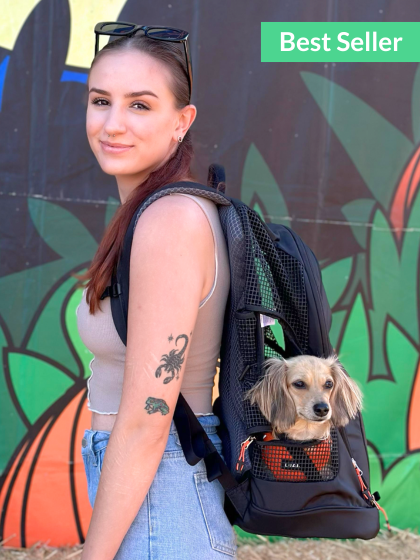
A horizontal dog backpack carrier has a supportive floor that allows your dog to remain on all fours, sit, lie down, or curl up naturally. A top example is the DjangoPack™ Dog Carrier Backpack, which is designed with a sturdy horizontal base that supports your dog from underneath and ensures he or she is riding parallel to the ground at all times.
When sizing your dog for a horizontal backpack carrier, compare these measurements with the carrier's usable interior space:
- Back length: Measure from the base of the neck to the base of the tail.
- Shoulder height: Measure from the floor to the top of the shoulder blades.
- Body width: Consider how much floor space your dog uses when standing, sitting, or lying down.
- Weight: Confirm that your dog falls within the carrier's recommended weight range.
- Preferred riding position: Think about whether your dog normally stands, sits upright, lies down, or curls up while being carried.
Body shape matters just as much as back length. A longer, leaner dog may fit very comfortably because their narrow frame leaves more usable floor space. A shorter but stockier or broader-chested dog may require more width and depth, even if their back length is considerably shorter.
Dogs also do not always position themselves in a perfectly straight line. Many sit at an angle or curl up diagonally inside a rectangular carrier. For that reason, back length is an important starting point, but it should not be treated as a strict one-to-one comparison with the carrier's floor length.
If you're considering the DjangoPack, our DjangoPack Dog Carrier Backpack Size & Fit Guide helps you evaluate if your dog will ride comfortably in the carrier.
For even more personalized guidance, use the responsive sizing calculator on the DjangoPack product page. Enter your dog's weight, back length, and standing height, and the calculator will evaluate those measurements together. It will then let you know whether your dog should ride comfortably with room to spare, fit more snugly, or have a compact fit inside the carrier.

How to Measure for an Upright-Style Dog Backpack Carrier
An upright-style dog backpack carrier holds the dog in a vertical or seated position rather than on a horizontal floor. Most upright carriers have openings for the dog's head, and occasionally the legs and tail.
Because upright carrier designs vary considerably, always follow the specific manufacturer's measuring instructions and size chart. Depending on the design, you may need to measure:
- Back length: Measure according to the exact starting and ending points specified by the manufacturer.
- Chest girth: Measure around the widest part of your dog's rib cage.
- Body weight: Confirm that your dog is safely within the carrier's stated weight limit.
An upright carrier should support your dog's body without forcing the spine, hips, or legs into an uncomfortable position. The carrier should feel secure without being restrictive, and any leg or neck openings should be snug enough to prevent escape without rubbing or pinching.
If you're still deciding which backpack design will work best for your dog, see our detailed guide to choosing a dog backpack carrier.
For a deeper look at structured bases, natural riding position, ventilation, secure closures, and internal tethers, read our guide to dog backpack carrier safety.
How to Measure Your Dog for an Airline Pet Carrier
For an airline pet carrier, focus on these key dog measurements:
- Full body length: Measure from the tip of your dog's nose to the base of the tail. Unlike a scoop-style tote, an airline carrier has to contain your dog's head and body completely when closed.
- Overall standing height: Measure from the floor to the top of your dog's head while they are standing naturally, and note the height to the ear tips if the ears stand upright. This helps you evaluate the vertical room inside the closed carrier.
- Body width: Measure across the widest part of the shoulders or rib cage so you can compare your dog with the carrier's usable interior width.
- Weight: Check the carrier manufacturer's weight limit and any applicable pet or combined pet-and-carrier weight limits imposed by the airline.
Your dog must fit comfortably inside the closed carrier, and the carrier's exterior must fit within the under-seat limits for your airline, aircraft, and seat. A larger carrier may give your dog more room but still be unusable for a particular flight.
Next, Check Your Airline's Carrier Limits
There is no universal “airline-approved” pet carrier size. Every airline has its own pet carrier sizing rules, although we do tend to see a common size among a few U.S. pet-friendly airlines. Both American Airlines and Delta, for example, list 18" L × 11" W × 11" H as the maximum dimensions for soft-sided in-cabin pet carriers.
With that said, Delta also notes that maximum dimensions depend on the aircraft being flown. If you fly Delta but end up on a small commuter plane, the dimensions might be smaller than 18" L × 11" W × 11" H.
Check your airline’s maximum pet carrier dimensions, ventilation requirements, fit requirements, and any applicable pet or combined pet-and-carrier weight limits.
Quick Tip When Flying With a Pup
Never assume that what worked on your last flight will automatically work on the next one. We have flown with Django many times, and we still always re-check the airline's current pet policy page before booking our trip.
Our regularly updated U.S. airline pet policy comparison can help you check current carrier restrictions before you fly.
How Much Room Should a Dog Have in an Airline Carrier?
Your dog should fit comfortably inside the fully closed carrier and be able to move around and lie down comfortably.
Some airlines will check your pet's size relative to the carrier at check-in. If your pet appears uncomfortably large for the carrier, the airline can refuse travel.
What if Your Dog Is Between Pet Carrier Sizes?
For an everyday tote or backpack, consider sizing up if your dog is close to the smaller carrier’s limits, has a broad chest, or is still growing—provided the larger size remains secure and comfortable to carry.
If your dog is petite, narrow, comfortably within all dimensions, and would slide excessively inside the larger carrier, the smaller size may fit better.
For an airline carrier, do not automatically size up. The larger bag must still fit beneath the seat and comply with the operating airline's exterior limits.
Most importantly, use the individual manufacturer's sizing guidance. Carrier dimensions, structure, openings, intended riding positions, and usable interior space vary too much for one universal “add two inches” rule to be reliable.
A good pet carrier company will be able to help evaluate fit using your dog's breed, weight, back length, height, body shape, preferred riding position, and how you plan to use the carrier.
At DJANGO, we know our pet carriers inside and out. We also know how different breeds, body shapes, and weights tend to fit in each design. If you're considering a DJANGO pet carrier but aren't sure which size is right for your pup, we're here to help!
Conclusion: Measure Your Dog. Don't Just Go By Weight.
If you remember one thing from this guide, make it this: Measure your dog for every pet carrier you're considering; don't just go by weight.
Measure your dog's body, consider how they naturally like to ride, and compare those measurements with the carrier's actual usable space—not just its maximum weight recommendation.
A well-fitting carrier should comfortably support your dog and make bringing them along easier for both of you. After more than a decade of traveling with Django, that's still the standard we use every time we evaluate a pet carrier.
Find the Right Carrier for Your Dog
Explore DJANGO pet carriers designed around supportive floors, secure construction, thoughtful sizing, premium materials, and real-world travel with small dogs.

Helpful Dog Carrier Sizing & Travel Guides
- 5 Types of Dog Carriers: Which Is Best for Your Dog?
- Are Dog Carrier Tote Bags Safe? What to Look For in a Supportive Pet Carrier
- Best Dog Carrier Tote Bag for Small Dogs: What to Look For
- How to Choose a Dog Backpack Carrier: Size, Safety & Fit
- Are Dog Backpack Carriers Safe? What Every Dog Owner Should Know
- DjangoPack Dog Carrier Backpack Size & Fit Guide
- U.S. Airline Pet Policy Comparison for In-Cabin Travel
- How to Train Your Dog to Love Riding in a Pet Travel Carrier