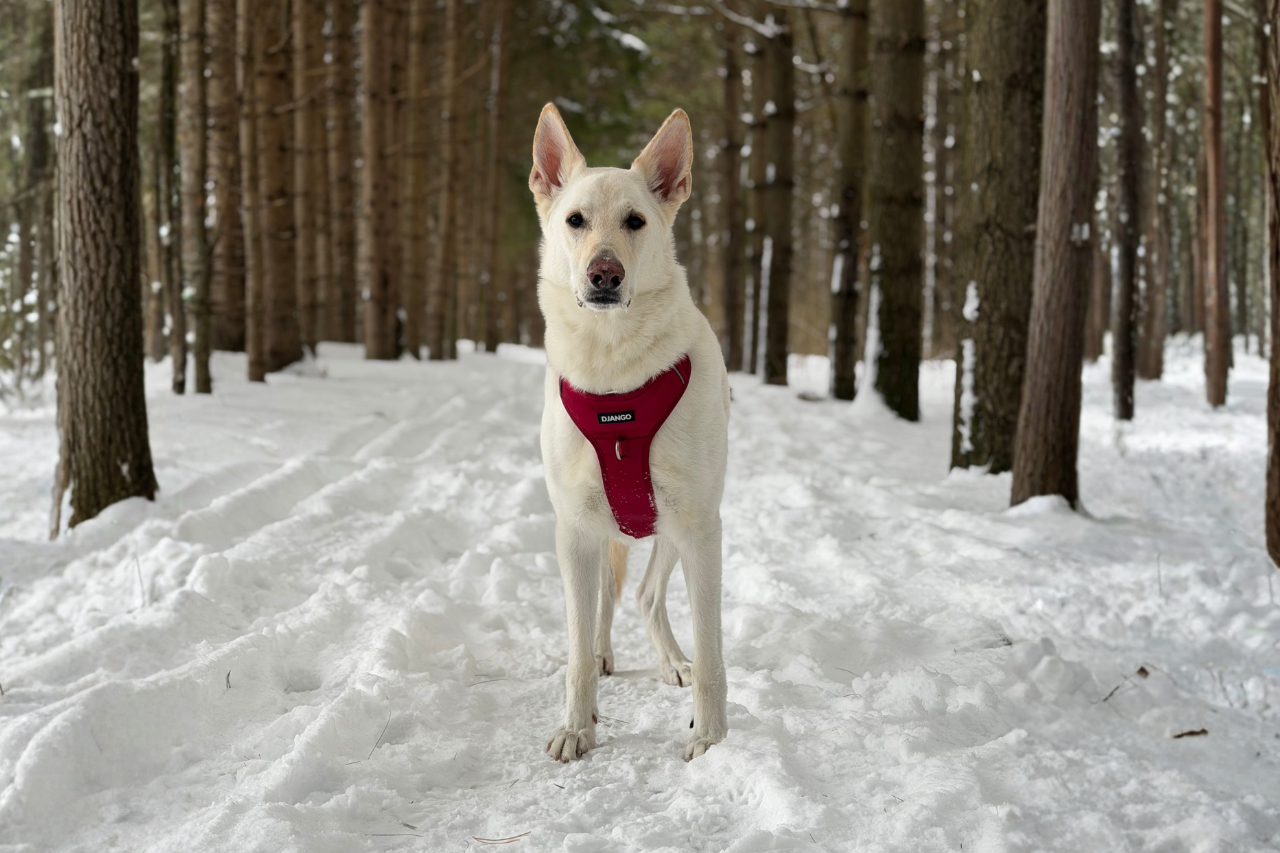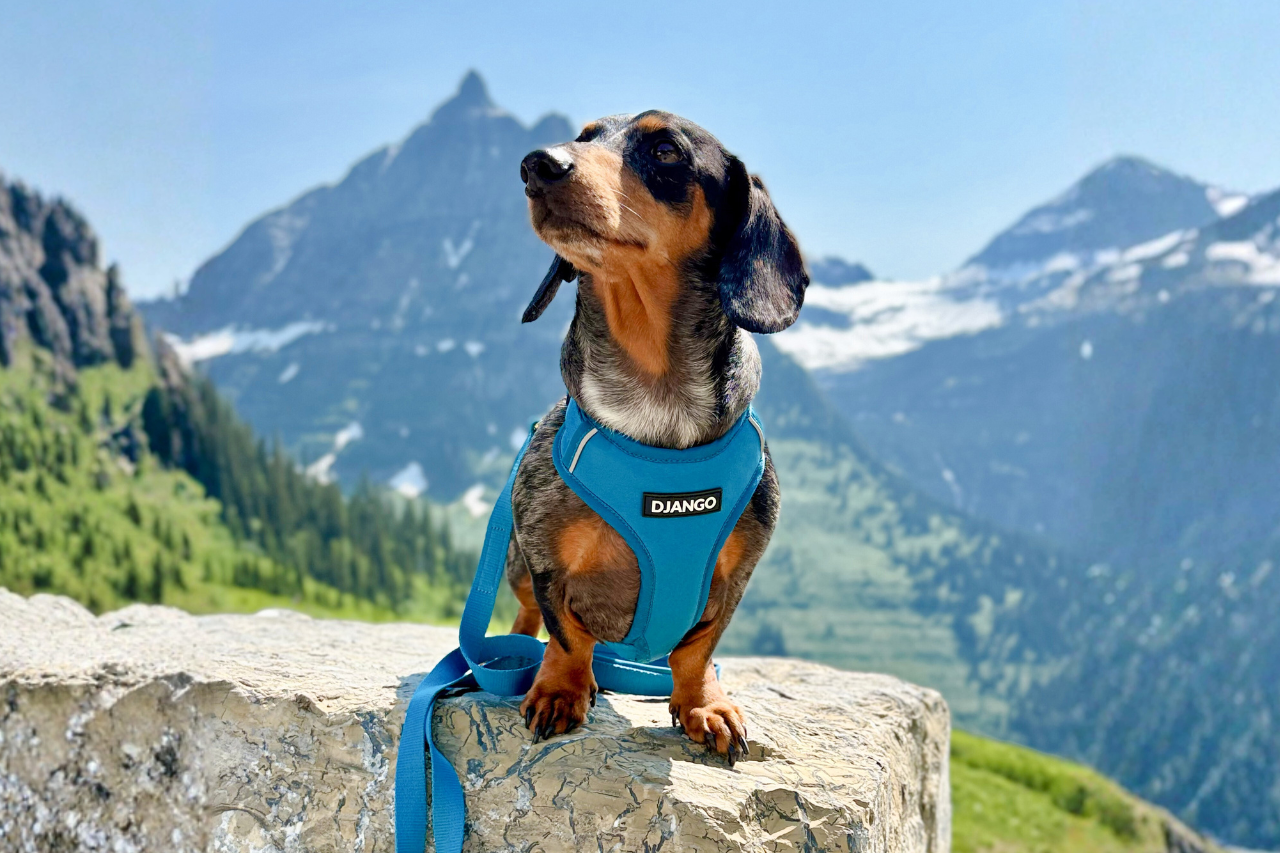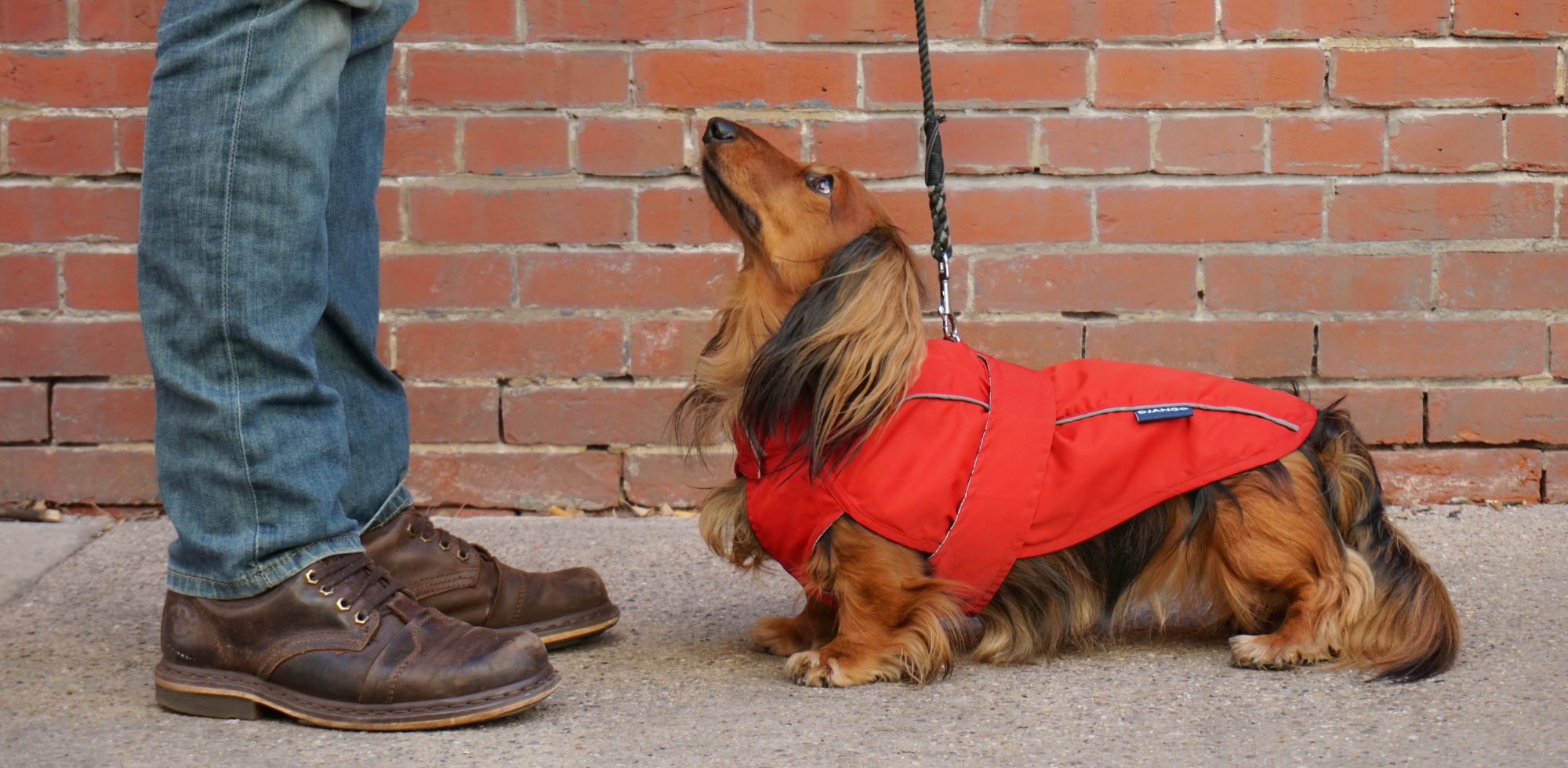
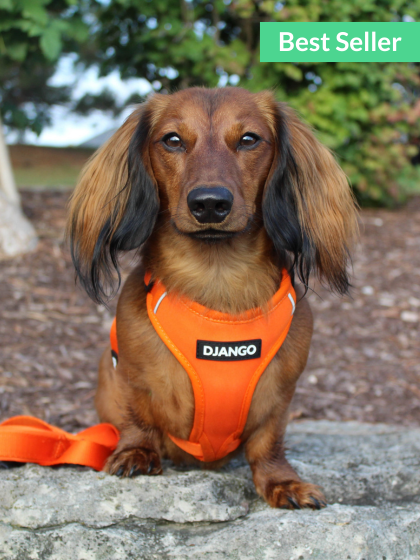

When we first brought Django home, he was a 4.9-pound dachshund puppy with big brown eyes and the shortest little legs. He was absolutely adorable — the kind of puppy that stopped people mid-stride on busy sidewalks.
It was mid-November, and New York City was already cold. We were living in Brooklyn at the time, and there was a big-box pet store just a short walk from our apartment. So we did what just about any first-time dog parent would do...
We bought Django a fleece jacket, a little puffer coat, and (because I couldn’t help myself) Batman and Superman doggy t-shirts that would eventually start to look like crop tops on his long dachshund body.
Because Django was a baby, he didn’t mind his new doggy clothes at all. He wore those tees and jackets all over NYC like it was the most natural thing in the world.
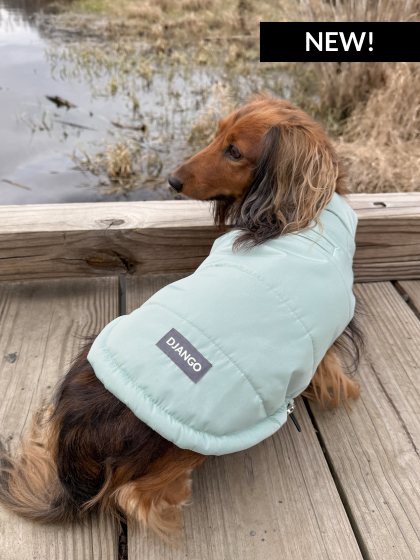
To this day, Django happily walks right into his soft dog hoodies and insulated puffer coats without a second thought. He’ll even tuck his head right into his harness before we head out for a walk or hike.
When it comes to dog clothes and harnesses, many dogs are not like Django. They may run away, turn their head, or suddenly act unsure about moving at all. And if you do manage to get the item on them, many dogs simply freeze — standing still and refusing to walk.
If that’s happening with your dog: you’re not alone — and you’re not doing anything wrong. In this DJANGO Dog Blog article, we explain why dogs freeze in clothing and harnesses, plus exactly how to help your dog get comfortable step by step.

First, let’s normalize this: freezing is extremely common
One of the biggest misconceptions around this behavior is that a dog who freezes is being stubborn or dramatic. In reality, freezing is one of the most natural responses dogs have when something unfamiliar is placed on their body.
Your dog doesn’t know that his new coat is meant to keep him warm or that the harness you just bought is supposed help him on walks. All dogs know is that something feels different. There are new sensations and a change in how their body feels.
When dogs aren’t sure how to respond, many of them choose the safest option they know: they freeze. This is a form of uncertainty and communication, not defiance.
Why dogs freeze when wearing clothes or harnesses
In our experience at DJANGO, freezing comes from one (or both) of these reasons: their brain is trying to process what’s happening, or something feels unusual or even uncomfortable.
Mental freeze: their brain is processing something new
For dogs who didn’t grow up wearing harnesses and coats, the sensation alone can be a lot for them. Fabric touching the back or chest, straps around the body, something moving with them when they walk. All of it is new and confusing information at once.
This is especially common with adult dogs who have never worn clothing, rescue dogs with unknown histories, or dogs who are naturally cautious or sensitive. Their body isn’t saying “no forever.” It’s saying, “I need a minute.”
Physical discomfort: when the gear doesn’t feel good
Not all freezing is emotional; sometimes it’s physical. Many dog coats and harnesses are stiff, bulky, or poorly designed. Rough seams, scratchy linings, chest panels that sit too low, straps that rub behind the front legs — all of these factors can make movement feel restricted, awkward, or uncomfortable.
Here is a guiding principle we live by at DJANGO when designing new dog apparel: If you wouldn't want it against your own skin, your dog won't either.
If your dog freezes with a coat or the second you put something on — especially if he or she is usually OK with apparel and harnesses — ask yourself: “Does this feel comfortable? Would this be comfortable on me?”

Why harnesses deserve special attention
Harnesses can trigger freezing in dogs too, especially when the fit or materials interfere with comfort and movement. If your dog freezes with a harness on, it’s often a sign that something feels restrictive, unfamiliar, or uncomfortable as they try to walk.
Unfortunately, many harnesses sold at big-box pet stores are designed with cost and mass production in mind — not how a dog’s body actually moves. Stiff fabrics, hard edges that dig into the chest or underarms, and rigid harness bodies that don’t flex can all work against a dog’s natural stride instead of moving with it.
If something feels restrictive or uncomfortable the moment a dog tries to walk, freezing is a very understandable response.
When a dog freezes in a harness, it’s their way of saying, “I don’t know how to move in this.” This is why thoughtful design matters so much. A well-designed harness should allow a dog to move naturally and comfortably, not force their body into a position that feels wrong.
High quality and comfortable dog harnesses should feel so lightweight and unobtrusive that your dog barely notices they’re wearing it at all.
Shop DJANGO Dog Harnesses
When “behavior issues” are really fit issues
A poor fit can look like resistance. If your dog freezes only once you start walking, refuses stairs or curbs, walks stiff-legged, or stops after just a few steps, there’s a good chance the issue isn’t training or attitude. Rather, the problem is fit or comfort.
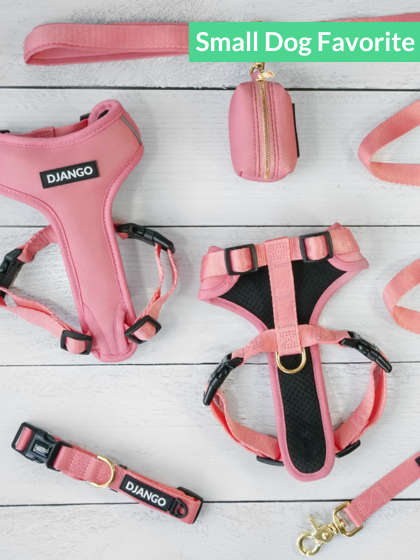
This is especially true for long-bodied breeds like dachshunds, dogs with broad chests, senior dogs, and dogs with past injuries or joint sensitivity. Even a nicely-made dog accessory can cause discomfort if the proportions or sizing aren’t right for your dog’s body.
If you want help figuring out what harnesses, dog coats, rain jackets, or other gear is best for your dog, email us at hello@djangobrand.com. We've outfitted breeds of every size and stature and have a great sense of what works best (and what doesn't work at all) for each breed.
If possible, please also include your dog’s breed, weight, and chest girth (measured right behind the front legs). This will let us find the best-fitting gear for your dog.
Get Sizing & Fit HelpPuppies vs adult dogs vs senior dogs
Puppies who are introduced to soft, flexible dog apparel early on usually adapt quickly — which is exactly what we saw with Django. Because our dachshund wore apparel as a puppy, coats, harnesses, and even pet carriers feels completely normal to him today. They are simply part of his routine.
Adult dogs who have never worn accessories and apparel typically need time to adapt. They’ve already established what their body normally feels like when they move, so anything new can feel unfamiliar or uncomfortable at first.
Senior dogs (or dogs with arthritis) may freeze because stiffness or pressure feels more intense, especially in cold weather. For them, comfort and ease of movement aren’t just preferences — they’re necessities.

How to help your dog get comfortable (step by step)
The key here is patience and realistic expectations. You’re not trying to “convince” your dog. You’re helping them feel safe and comfortable in something new.
Step 1: Start indoors and with low expectations
Whether it’s a new harness or a coat, start inside your home and keep it short. Let your dog wear the item for just a minute or two. Don’t head outside yet, and don’t worry about whether they walk around or not. Treats and gentle praise are helpful, but keep your energy relaxed and neutral — almost like you’re saying, “This is no big deal.”
Step 2: Make the gear predict good things
Next, try putting the coat or harness on right before something your dog already loves, like mealtime or a favorite treat. Over time, this helps your dog’s brain connect the gear with something positive, instead of something to be unsure about.
Step 3: Keep early walks short and familiar
Once your dog seems comfortable indoors, take things outside — but keep it simple. Choose a familiar route and plan for a very short walk. Two or three minutes is plenty at first. End on a win, even if that win is just a few calm steps before heading back inside.
Step 4: Increase time gradually (over days, not minutes)
If your dog freezes again at any point, that’s okay. Take a step back, shorten the time, and try again later. Progress with this kind of thing is rarely linear, and that’s completely normal.
What not to do
As tempting as it can be, try not to drag your dog forward or push them through it. Forcing movement can create a negative association and make the next attempt harder. Comfort always comes first, and confidence tends to follow when your dog feels good in what they’re wearing.

Why fabric and materials matter in dog harnesses and apparel
Comfort isn’t just about fit. It is also about how something feels against your dog’s body. Soft linings, flexible fabrics, and thoughtful seam placement make a huge difference in how willing a dog is to move, walk, or even just stand comfortably. When something feels stiff, scratchy, or bulky, dogs notice right away and often freeze in place.
At DJANGO, we’re very intentional about the materials we choose for this exact reason. Many of the fabrics we use come from the same mills that produce high-end children’s apparel — not because it sounds fancy, but because they’re designed to be soft, lightweight, and comfortable against skin.
When gear moves with your dog instead of working against their body, dogs are much less likely to freeze or shut down when wearing it.
Shop Comfy Dog ApparelSometimes it’s just the wrong gear
If your dog froze in a stiff coat, bulky harness, or scratchy sweater, that experience can shape how they feel about all gear moving forward. That doesn’t mean they’ll never be comfortable wearing anything. Often, it simply means they need something better designed, better fitting, and kinder to their body — like a soft, flexible harness or cozy winter dog coat designed to move with them.
If you’re not sure what to try next, we’re happy to help. Email us at hello@djangobrand.com with your dog’s breed, weight, and chest measurement if you have it.
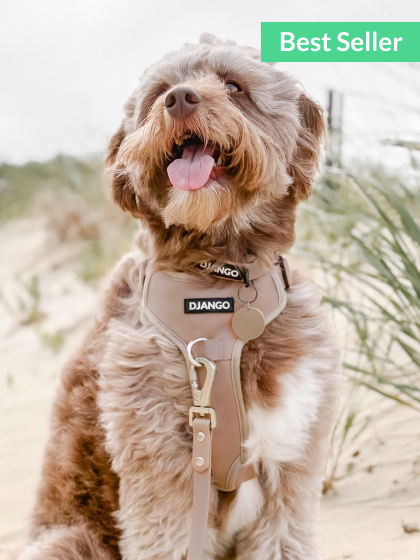
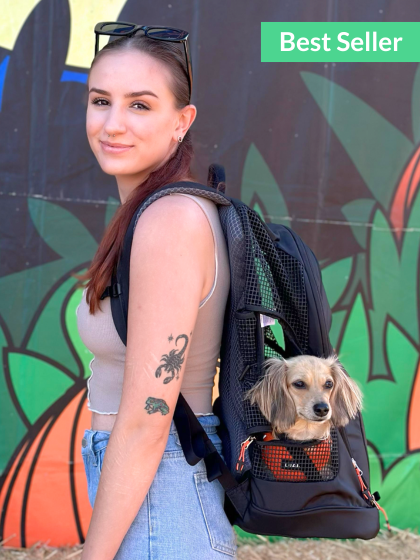
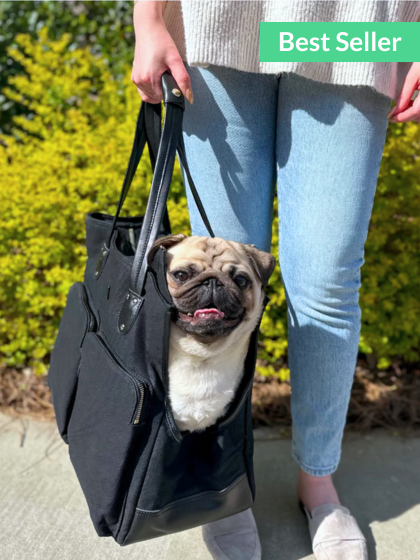
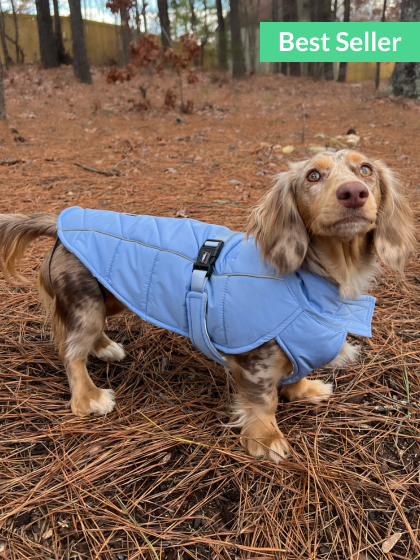
View DJANGO Best Sellers
FAQ: Dogs freezing in clothes or harnesses
Why does my dog stop walking when I put a coat on?
Usually because the sensation is unfamiliar or uncomfortable. This is very common, especially for dogs who are new to wearing apparel. Start indoors, keep sessions short, and make sure the coat is soft and doesn’t restrict movement.
Is it normal for dogs to freeze in a harness?
Yes. If a dog freezes with a harness on, it’s often because the fit or materials of the harness interfere with how the dog naturally moves. Look for a harness that allows free shoulder movement, sits comfortably on the chest, and avoids rubbing behind the front legs.
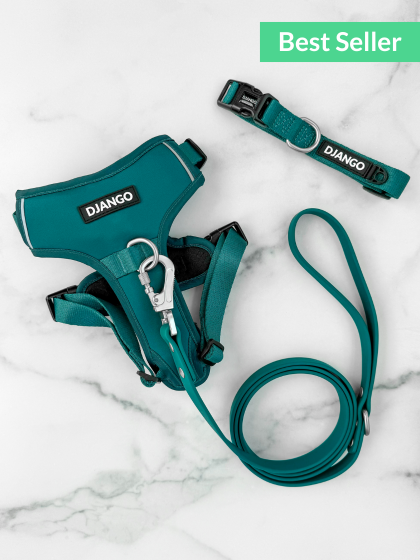
Our Tahoe No Pull Dog Harness, for example, was designed as an everyday harness using soft, flexible neoprene and custom webbing so it feels lightweight and comfortable rather than restrictive.
How long does it take for a dog to get used to wearing clothes?
It can take anywhere from a few days to a few weeks, depending on your dog’s age, temperament, and how comfortable the item is. Go slowly, build positive associations, and increase time gradually.
Should I force my dog to walk in a new harness or coat?
No. Forcing movement can create negative associations and slow progress. If your dog freezes, take a step back and focus on comfort, fit, and short, positive sessions.
Which dogs are more sensitive to wearing clothes or harnesses?
Adult and senior dogs who are new to wearing apparel and harnesses tend to be more sensitive to fit and fabric and are most likely to "freeze".
Long-bodied breeds, dogs with past injuries, or dogs with joint sensitivity may notice stiffness or restriction more quickly. This is where high-quality gear matters most — soft, flexible dog coats and lightweight, padded harnesses that move with the body can make all the difference.