
Has your small dog ever slipped out of a harness?
Maybe you were on your regular neighborhood walk when your pup suddenly planted their paws, pulled backward, and wiggled free before you could react.
It is a terrifying moment — that split second when you realize your dog is loose and their harness did not secure them the way you expected.
If your dog has ever backed out of a harness, slipped through a loose neckline, or made you question whether their walking gear is actually secure, you are not alone. Small dogs can be surprisingly hard to fit, and truly high-quality and secure harnesses can be surprisingly difficult to find.
That is why so many dog owners search for an escape-proof harness for small dogs.
In this DJANGO guide, we’ll explain why small dogs slip out of harnesses, what features actually prevent harness escapes, what harness styles to avoid, and how to choose an escape-proof dog harness that is truly comfortable and secure for your dog.
The best escape-proof harness for small dogs is one that keeps your dog securely in place when it is properly sized and adjusted. That means no slipping out, no backing out, and no paws stepping through loose straps.
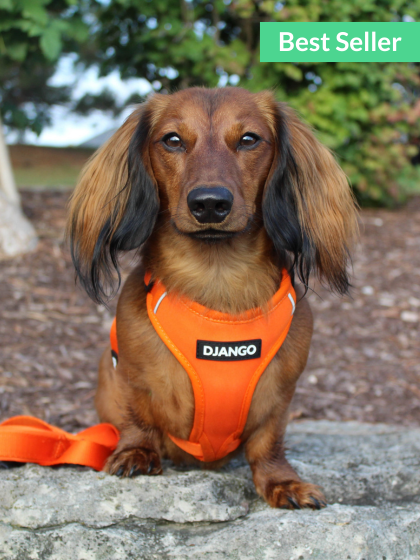
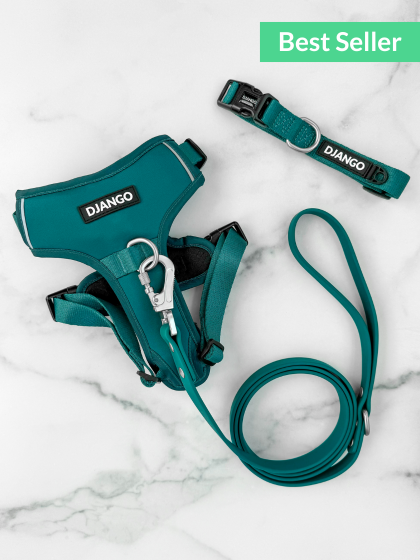
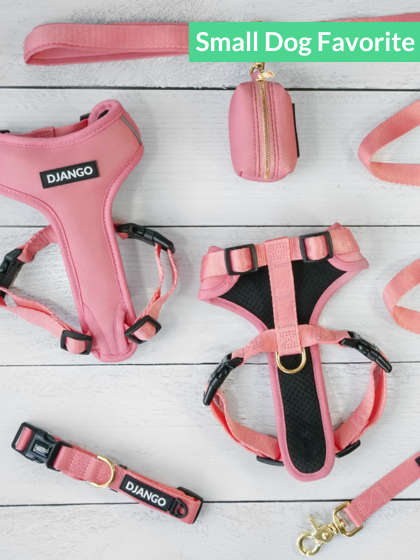
For most small and medium dogs up to 25–30 lbs, we recommend the DJANGO Adventure Dog Harness. It is lightweight, padded, adjustable at the neck and chest, and thoughtfully designed to create a secure, escape-resistant fit without overwhelming your dog with bulky gear or chunky hardware.

Need help choosing a size? Email us your dog’s breed, weight, and chest girth at hello@djangobrand.com. We’re happy to help you find the best fit.
Can any dog harness truly be escape-proof?
Why small dogs slip out of harnesses
How to choose an escape-proof harness for small dogs
What to avoid if your small dog backs out
Why we recommend the DJANGO Adventure Dog Harness
How to fit a small dog harness to prevent slipping out
Veterinarian & expert resources
FAQ
Can Any Dog Harness Truly Be Escape-Proof?
A well-designed dog harness can be escape-proof when it is the right size, properly adjusted, and shaped well for your dog’s body.
Problems can happen, however, when the harness is too big, the neck opening is too loose, the chest straps are not snug enough, or the harness does not match your dog’s proportions. In these cases, even the most secure harness design can leave enough room for a dog to back out, step through a strap, or wiggle free.
That is why fit matters so much. The best escape-proof harnesses are not “tight”; they are adjustable, stable, and fitted to remove gaps while still allowing your dog to move naturally and comfortably at all times.
The best escape-proof dog harness is one that can be tailored to your dog’s unique build and measurements — not just their weight. It should also have security-focused features like neck and chest adjustment, a stable rib cage fit, durable and secure buckles, and a neckline that sits close to the body without gaping.

Why Small Dogs Slip Out of Harnesses
Most harness escapes happen for very practical reasons. The harness is usually too loose in one area, too bulky in another, or not adjustable enough for your dog’s actual body shape.
And while some small dogs are extra wiggly, stubborn, or energetic, that should never automatically mean they can slip free. A well-designed, properly fitted harness will keep even the most enthusiastic escape artists secure.
So why do small dogs slip out of harnesses in the first place? Here are the most common reasons:
1. The neck opening is too loose
A poorly fitting harness neckline is one of the biggest reasons small dogs back out of harnesses.
A harness can feel snug around your dog’s chest but still leave too much space around the neck and shoulders. When your dog pulls backward, that loose neckline can slide forward toward the head. Once that happens, your dog may be able to wiggle free.
2. The harness only adjusts at the chest
Chest adjustment is very important, but for many small dogs, it is not enough.
Small dogs can have delicate frames, narrow shoulders, deep chests, fluffy coats, or proportions that do not match a basic “small dog” size chart. If the harness only adjusts around the rib cage, you may be forced to choose between a chest fit that feels secure and a neck opening that gaps.
That gap is not just annoying. It can increase the chance of your dog backing out.
This is especially common with harnesses that only adjust around the chest — and there are a lot of them out there. If the neck opening is fixed, you are stuck with whatever shape the harness was designed to have, even if that shape does not match your dog.
3. Your dog has narrow shoulders or a smaller head
Some small dogs are shaped in a way that makes slipping out easier. Chihuahuas, Yorkies, Italian greyhounds, miniature pinschers, toy poodles, terriers, and many small mixed breeds can have narrow shoulders or petite frames that make a loose harness easier to escape.
When the widest part of your dog’s body is the chest, but the shoulders and head are smaller, the harness needs to be adjusted very carefully. If the neckline floats away from the body, your dog may be able to reverse out.
For a broader look at why small dogs need an intentionally designed harness — from delicate necks and unique chest shapes to comfort, pressure distribution, and everyday fit — read our full guide to the Best Harness for Small Dogs.
4. Your dog has a deep, broad, or hard-to-fit chest
Not all small dogs are built alike. A dachshund, French bulldog, pug, Boston terrier, corgi, Cavalier, and Havanese may all be considered “small dogs,” but their bodies are completely different.
Deep-chested dogs may need more room through the rib cage but a more secure fit at the neck. Broad or barrel-chested dogs may fill out the front of a harness differently. Long-backed dogs may need a harness that sits comfortably behind the front legs without shifting too far back or riding too high.
If your dog has a deep chest, broad chest, long back, short legs, or unique proportions, you may also find this guide helpful: Best Dog Harness for Deep-Chested and Broad-Chested Small Dogs.

5. Fluffy coats can hide a loose fit
A fluffy dog can look like their harness fits perfectly when the straps are actually sitting on top of the coat, not close enough to the body.
This happens often with Shih Tzus, Havanese, Maltese, Bichons, Pomeranians, Lhasa Apsos, doodle mixes, and other small dogs with soft or full coats. The harness may look snug, but as the fur compresses during a walk, the straps can loosen and shift.
If your dog has a fluffy coat, check the fit with your fingers under the straps and recheck again after a few minutes of walking.
6. The harness sits too high near the throat
A secure harness should not fit like a collar. If the front of the harness sits high near the throat, it can create discomfort, pressure, coughing, or resistance. It may also shift awkwardly when your dog pulls or backs up.
For small dogs, the front of the harness should sit lower on the chest, below the true neckline — not high up like a collar. This helps direct leash pressure toward the strong chest area instead of the delicate neck and trachea.
7. The harness is uncomfortable, so your dog fights it
Sometimes a dog slips out because the harness gives them room to escape. Other times, they are actively trying to get out because the harness feels uncomfortable.
If a harness rubs behind the front legs, digs into the chest, restricts shoulder movement, or feels too bulky, your dog may freeze, twist, paw at it, or pull backward. The more your dog fights the harness, the more likely a loose or poorly shaped design is to fail.
- Narrow-shouldered dogs like Chihuahuas, Yorkies, and Italian greyhounds
- Long-backed or deep-chested dogs like dachshunds
- Broad-chested dogs like French bulldogs, pugs, and Boston terriers
- Fluffy dogs whose coats can hide extra space under the straps
- Wiggly puppies and dogs who pull backward when nervous
- A loose neckline
- Limited adjustability
- Chest-only adjustment
- Bulky or uncomfortable materials
- A harness that sits too high near the throat
- Sudden backward pulling or backing up
If you specifically have a dachshund, you may also want to read our dedicated guide: Best Harness for Dachshunds. Dachshunds are especially prone to fit challenges because of their long backs, deep chests, and short legs.

How to Choose an Escape-Proof Harness for Small Dogs
If your main concern is slipping out, you do not need a long list of fancy harness features. You need the details that actually help create a secure and stable fit.
Here is what matters most when choosing an escape-resistant harness for a small dog.
A secure small dog harness should adjust at both the neck and chest. This helps remove gaps and gives you a more customized fit around your dog’s body.
The neck opening should sit close enough to your dog’s body that it does not float away or slide forward when your dog backs up.
The chest straps should sit securely around your dog’s rib cage without feeling too tight or too loose. A secure harness should stay stable as your dog walks, turns, and backs up — not twist or slide around their body.
When fitted correctly, the top of the harness should rest below the throat, not up high like a collar. This helps keep leash pressure across the strong chest area instead of the delicate neck.
Small dogs are more likely to resist bulky gear. A lightweight harness can feel more natural while still offering a secure, supportive, and comfortable fit.
Soft is good, but flimsy is not. Look for straps, buckles, and hardware that stay in place once adjusted.
Adjustability is the biggest security feature
If your dog slips out of harnesses, start by looking at adjustability. A harness that adjusts only around the chest may leave extra space at the neck, especially on petite or narrow-shouldered dogs.
A harness with both neck and chest adjustment lets you fine-tune the fit in the two places that matter most for preventing escapes.

The harness should stay balanced when your dog backs up
A good escape-resistant harness should not immediately slide toward your dog’s head when they pull backward. Some movement is normal, but the harness should remain balanced and secure around the chest and shoulders.
This is why shape matters. A secure harness should work with your dog’s body, not just wrap around it.
Comfort helps prevent escapes, too
Comfort might not sound like an escape-proof feature, but it absolutely matters.
If a harness rubs, pinches, restricts movement, or feels too stiff, your dog is more likely to resist it. And once a small dog starts twisting, freezing, backing up, or trying to paw out of the harness, any fit issue becomes more obvious.
Choose a harness that is adjustable, stable, lightweight, and comfortable. The goal is not to make the harness tight. The goal is to remove unnecessary gaps while still allowing your dog to move naturally.
What to Avoid If Your Small Dog Backs Out of Harnesses
If your small dog has escaped before, a few harness styles and sizing habits deserve extra caution.
| What to avoid | Why it can be a problem |
|---|---|
| Harnesses with a loose, fixed neckline | If the neck opening cannot be adjusted, it may leave enough space for your dog to back out. |
| Chest-only adjustment | A snug chest fit does not always mean the neckline is secure, especially for narrow-shouldered small dogs. |
| Oversized vest harnesses | Soft vest harnesses can be cozy, but if they gap, stretch, or shift, they may not be secure for escape-prone dogs. |
| Bulky harnesses on small frames | Too much material can make small dogs uncomfortable, which may cause them to freeze, twist, or try to back out. |
| Harnesses that sit high like a collar | A harness that presses near the throat can be uncomfortable and may not distribute leash pressure correctly. |
| Buying by weight alone | Weight is helpful, but chest girth and body shape matter more. Two dogs can weigh the same and need different sizes. |
| Leaving extra room “for comfort” | A harness should not be tight, but too much extra room can create gaps that make slipping out easier. |
Some step-in and vest harnesses work well for calm small dogs, but they are not automatically safer or more escape-proof. The best choice depends on how well the harness fits your dog’s neck, chest, shoulders, and movement.
Why We Recommend the DJANGO Adventure Dog Harness for Escape-Prone Small Dogs
The DJANGO Adventure Dog Harness was designed for small and medium dogs who need a secure, comfortable harness that works with their body shape — not against it.
For escape-prone small dogs, the biggest issue is usually not one single thing. It is the combination of a loose neck opening, poor adjustability, awkward strap placement, uncomfortable materials, or a harness shape that shifts when the dog pulls backward.
The Adventure Dog Harness addresses those issues with a lightweight, adjustable, chest-focused design made for small dogs up to 25–30 lbs.
Four points of adjustment help remove gaps
The Adventure Dog Harness adjusts in four areas at both the neck and chest — one of the most important details for small dogs that slip out.
Instead of being forced to choose between a snug chest and a loose neckline, you can fine-tune both areas for a secure, customized fit.
A secure neckline helps reduce backing out
A loose neck opening is one of the most common reasons small dogs back out of harnesses. The Adventure Dog Harness lets you adjust the neckline so it sits closer to your dog’s body without feeling tight or restrictive.
A chest-focused fit keeps pressure away from the throat
The front panel is designed to sit below the throat and align across the chest. This helps keep leash pressure away from the delicate neck while supporting a more stable fit during everyday walks.
Lightweight construction is ideal for small frames
Some small dogs fight bulky harnesses because they feel stiff, heavy, or overwhelming. A dog that feels uncomfortable is more likely to freeze, twist, back up, or try to escape.
The Adventure Dog Harness is padded and secure, but still lightweight enough for daily walks, errands, travel days, and outdoor adventures.

Soft materials help reduce rubbing and resistance
Soft custom webbing, a padded neoprene body, and a breathable sport mesh lining help the harness feel comfortable against your dog’s body.
That comfort matters. A harness that rubs behind the front legs or irritates your dog’s skin can make them more determined to get out of it.
Easy on/off buckles make walks smoother
Two durable side-release buckles make the harness easy to secure around your dog’s body without lifting paws or wrestling them into leg holes.
For wiggly small dogs, sensitive dogs, senior dogs, and puppies who dislike too much handling, that can make the entire walk routine calmer from the start.
Small and medium dogs up to 25–30 lbs who need a lightweight, secure, adjustable everyday harness.
If your dog is larger than the Adventure Dog Harness size range, is a very strong puller, or you want front-clip leash control, the DJANGO Tahoe No Pull Dog Harness may be a better fit. But for most small dogs who need a lightweight, secure, escape-resistant everyday harness, we recommend the Adventure Dog Harness.
Shop the Adventure Dog Harness Ask us for sizing help
How to Fit a Small Dog Harness to Help Prevent Slipping Out
Even the best harness will not work properly if it is the wrong size or adjusted too loosely. Here is a simple fit check you can use before every walk, especially if your dog has slipped out of harnesses before.
1. Measure your dog’s chest girth first
Use a soft measuring tape and measure around the widest part of your dog’s chest, usually right behind the front legs.
Chest girth is usually the most important measurement for choosing a harness size. Weight can help, but it should not be the only thing you use.
2. Choose the right size range
If your dog is between sizes, check both the size chart and your dog’s body shape. A narrow dog, fluffy dog, broad-chested dog, or deep-chested dog may fit differently even if their weight seems straightforward.
- Small: chest girth 13–16 in (33–41 cm)
- Medium: chest girth 16.5–20.5 in (42–52 cm)
- Large: chest girth 21–26 in (53–66 cm)
Designed for small and medium dogs up to 25–30 lbs.
Not sure which size to choose? Email us your dog’s breed, weight, and chest girth at hello@djangobrand.com and we’ll help you choose the best fit.
Shop the Adventure Dog Harness3. Adjust the neck straps
Start by adjusting the neck strap so the front of the harness sits correctly on your dog’s chest — below the true neckline and not high up like a collar.
If the neck strap is too tight or the harness sits too high, the front of the harness may ride up toward the throat during walks. The goal is for the harness to sit lower on the chest, below the true neckline, so leash pressure stays off the neck and the body straps sit more comfortably behind the front legs.
4. Adjust the chest straps
Next, adjust the chest straps so the harness feels secure around your dog’s rib cage without digging in. Use the 2-finger rule to allow for a little spare room. The fit should be snug but comfortable — never tight.
Your dog should be able to walk, sit, sniff, and move naturally. The harness should not spin, twist, slide dramatically, or rub behind the front legs.

5. Check behind the front legs
Check the area behind your dog’s front legs. The harness should not rub directly against the armpits or restrict your dog’s natural stride.
If the harness is sitting too high or too close to the front legs, loosen the neck strap slightly so the front panel can settle lower on your dog’s chest. This often helps the harness body sit farther back and gives your dog more comfortable clearance behind the front legs. Then recheck the chest straps and adjust as needed.
6. Do a gentle back-out check
Attach the leash and gently encourage your dog to take a step backward. The harness should stay in place and should not slide forward over the shoulders or toward the head.
If it moves too much, adjust the neck and chest straps and try again. If there is still a lot of movement, the harness may be the wrong size or shape for your dog.
7. Recheck after the first few walks
After the first few walks, do a quick fit check and make small adjustments if needed.
- No large gaps at the neck
- Chest straps are snug but not tight (use 2-finger rule to ensure comfort)
- Front panel sits below the throat
- Harness does not rub behind the front legs
- Harness does not slide forward when your dog backs up
- Your dog can walk, sit, lie down, and move naturally at all times
Veterinarian & Expert Resources Worth Reading
If you like understanding the “why” behind harness fit and safety, these expert resources are helpful:
- AKC: The importance of a well-fitting dog harness — read here
- AKC: Choosing the right dog harness — read here
- AKC: How to put on a dog harness — read here
- VCA Hospitals: Collar and harness options for dogs — read here
FAQ: Escape-Proof Harnesses for Small Dogs
What is the best escape-proof harness for small dogs?
The best escape-proof harness for small dogs is one that adjusts at both the neck and chest, sits below the throat, stays secure around the rib cage, and does not leave large gaps that allow your dog to back out.
For small and medium dogs up to 25–30 lbs, the DJANGO Adventure Dog Harness is our top recommendation. It is lightweight, padded, adjustable at the neck and chest, and designed to keep small dogs secure and comfortable when properly fitted — with no slipping out, no backing out, and no paws stepping through loose straps.
Can a small dog still slip out of an escape-proof harness?
No harness is truly escape-proof if it is the wrong size, poorly adjusted, or not shaped well for your dog’s body.
The goal is to choose an escape-resistant harness and fit it correctly. That means removing large gaps at the neck, securing the chest straps around the rib cage, checking that the harness sits below the throat, and making sure it does not slide forward when your dog backs up.
Why does my small dog keep backing out of their harness?
Small dogs often back out of harnesses because the neck opening is too loose, the harness only adjusts around the chest, or the harness does not match their body shape.
Narrow shoulders, deep chests, fluffy coats, and sudden backward pulling can all make slipping out easier. A more adjustable harness with a secure neckline and stable chest fit can help reduce this risk.
How do I stop my small dog from slipping out of a harness?
Start by making sure your dog is wearing a harness that actually fits their body shape. The best escape-proof harnesses adjust at both the neck and chest, sit securely around the rib cage, and do not leave large gaps at the neckline. We highly recommend the DJANGO Adventure Dog Harness for small dogs.
If you already have a harness, measure your dog’s chest girth, confirm the size is correct, and adjust the neck and chest straps so the fit is snug but comfortable. Before walking, attach the leash and gently encourage your dog to step backward. If the harness slides toward the head or your dog can still wiggle free, it is likely the wrong size, too loose, or not the right shape for your dog’s body. In that case, the safest next step is to look for a better-fitting, more adjustable harness designed for small dogs that slip out.
How should a harness fit a small dog so it stays secure?
A well-fitted small dog harness should be secure around your dog’s body without being tight. It should stay in place as your dog walks, turns, sniffs, and backs up — without gaping at the neck, twisting around the body, or rubbing behind the front legs.
The front of the harness should sit below the throat, not high up like a collar. This helps direct leash pressure away from the delicate neck and trachea and toward the strong sternum, or chest bone.
The chest straps should wrap securely around your dog’s rib cage without digging in. You should be able to fit two fingers comfortably under the straps, and your dog should be able to walk, trot, sit, and move naturally at all times.
Are step-in or vest harnesses good for small dogs that slip out?
Some small dogs do well in step-in or vest harnesses, but they are not automatically more secure. The most important factors are fit, adjustability, stability, and comfort.
If a step-in or vest harness gaps at the neck, shifts during walks, stretches out, or allows your dog to back out, a more adjustable harness may be a better option.
What type of harness is safest for a small dog that slips out?
The safest harness for a small dog that slips out is one that is adjustable, secure, comfortable, and properly fitted. Look for neck and chest adjustment, a stable rib cage fit, a front panel that sits below the throat, and materials that hold their adjustment during walks.
The DJANGO Adventure Dog Harness is our top recommended escape-proof harness for small dogs because of its secure, adjustable, and lightweight design.
Made for small and medium dogs up to 25–30 lbs, the Adventure Dog Harness adjusts at both the neck and chest, fits securely around the rib cage, and is designed to stay stable without restricting natural movement. When fitted properly, it helps prevent slipping out, backing out, and paws stepping through loose straps.
What is the best escape-proof harness for dachshunds?
Dachshunds need a harness that is lightweight, adjustable, secure at the neck and chest, and shaped for a long-backed, deep-chested body.
The DJANGO Adventure Dog Harness is one of the best escape-proof harnesses for dachshunds because it offers a secure, chest-focused fit without unnecessary bulk. Tens of thousands of customers love the Adventure Dog Harness for their dachshunds because it is lightweight, comfortable, easy to adjust, and designed to help prevent slipping out when fitted properly.
For more dachshund-specific fit advice, read our full guide: Best Harness for Dachshunds.
The DJANGO Adventure Dog Harness is lightweight, padded, adjustable at the neck and chest, and thoughtfully designed for small and medium dogs up to 25–30 lbs.